

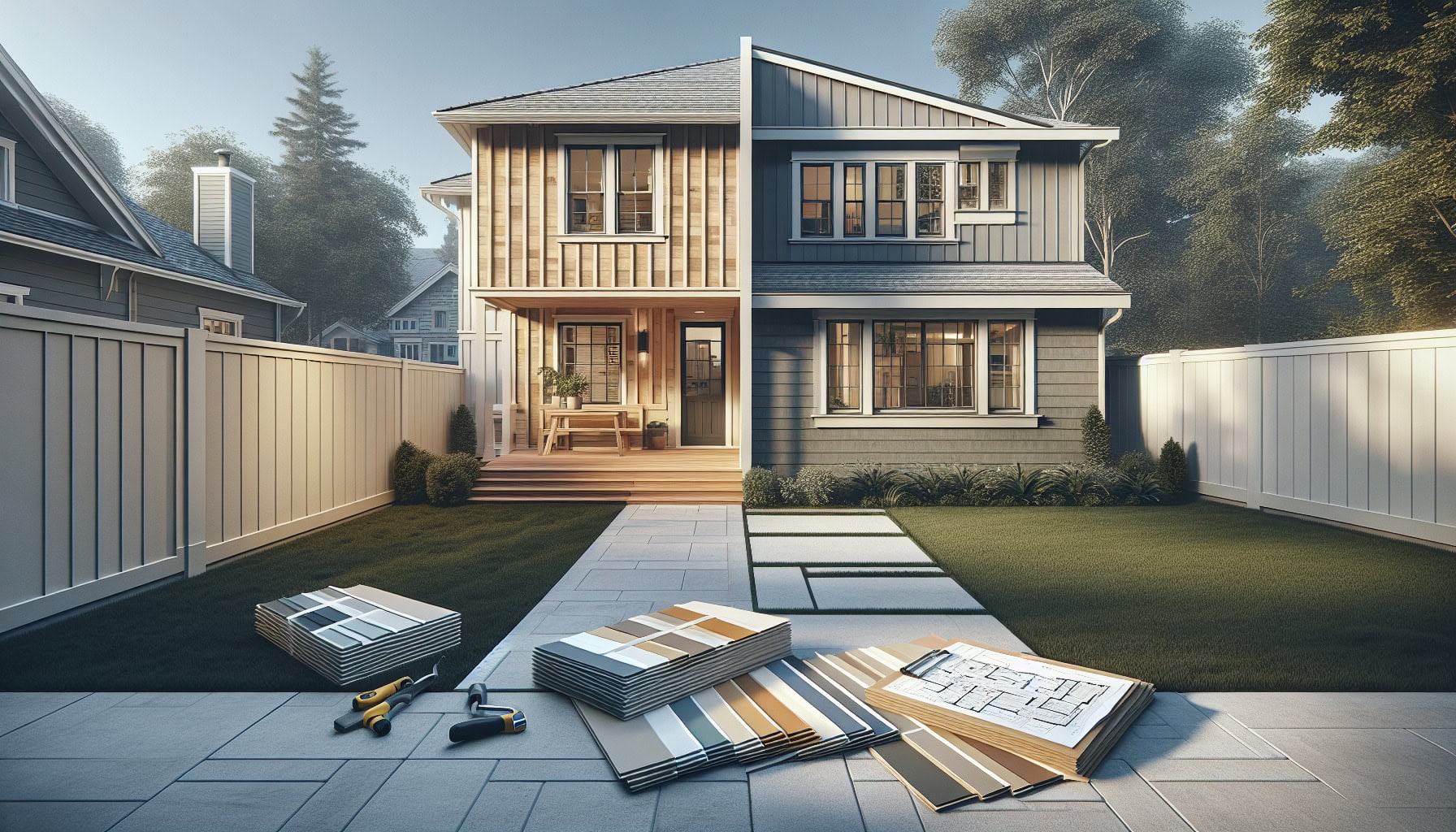
Feasibility First-Align Scope & Budget
When considering match exterior cladding on home addition tips, the most critical first step is to establish a viable budget rooted in the realities of your property, materials, and project goals. Many owners set their sights on a seamless exterior-matching the addition’s cladding to the home’s existing façade-but this design intent must be measured against early cost modeling. Cost is never an afterthought. It shapes the process from day one.
Our feasibility design phase defines a clear budget before construction begins. We align scope, materials, and priorities with real costs so every decision is grounded in numbers-not guesswork.
This phase delivers several key outputs. First, we generate and compare scope options-ranging from “essential matches” on visible elevations to full-home re-cladding for a perfect blend. Next, we provide ROM (Rough-Order-of-Magnitude) pricing bands, reflecting the impact of different choices: fiber cement versus natural stone, horizontal lap versus board-and-batten panelization, or careful color matching. Early value-engineering is embedded at this stage. For example, if your neighborhood allows, we might explore manufactured stone as a high-value alternative to quarried veneer, or recommend color-matched fiber cement for cost control.
Along with scope and options, you’ll receive a preliminary cost baseline tied directly to your preferred approach. This baseline provides leadership for the process. Establish the budget in feasibility, then manage it actively through design.
Clients exploring distinctive projects, like new bedrooms or custom mudrooms, benefit from early clarity on matching exterior finishes. Possible “unknown unknowns” such as hidden substrate issues or code-mandated upgrades also enter our feasibility projection, so surprises are minimized down the line. Cost is a design input, not an afterthought.
This disciplined feasibility approach makes it possible to answer core questions: What will it cost to match the existing cladding precisely? Is a near-match or complementary contrast the best value? Can we phase the work to hit a realistic target? The answers provide a clear runway from concept to construction, reducing owner risk at every step.
Design with Cost Checkpoints
Once feasibility is clear, design advances with regular financial alignment. Cost checkpoints at key design milestones ensure your cladding match plan stays on track and within the established cost envelope. Design informs cost, and vice versa. That precision is essential in projects where material consistency, transitions, and curb appeal are at stake.
Throughout detailed design, we treat the budget as a live document. Scheduled cost checkpoints at key milestones confirm scope against budget and capture value-engineering trade-offs.
Explicit Cost Gates
We review scope and pricing:
After Schematic Design, we verify initial match exterior cladding on home addition tips against your priorities and the site’s actual measurements. Texture, reveals, and trim details can have major cost implications that become apparent at this stage.
After Design Development, the specific material selections (such as shingle profiles or color blends) and critical transitions (such as abutting new fiber cement to original lap siding) are costed in detail. We revisit alternatives, if needed, to protect your investment.
At approximately 50% Construction Documents, updated structural and waterproofing details clarify interface points between old and new cladding. Substitute materials or alternate fastener schedules can create cost and schedule opportunities. This checkpoint may trigger final adjustments for efficiency.
At approximately 90% Construction Documents, every field condition and exterior detail is papered. We provide a comprehensive budget update, narrowing variances as you make final decisions. These reviews empower clients to weigh visual harmony against incremental spend-and avoid late-breaking surprises.
For instance, consider this illustrative tightening scenario over the design process:
Feasibility: €120k–€140k → Design Development: €132k–€136k → 90% Construction Documents: €134.8k (price locked pre-construction). This progression demonstrates how we actively manage and narrow the budget at each phase. Price lock occurs before construction. This is a hypothetical example to illustrate process, not an offer or guarantee.
Every checkpoint is an opportunity to revisit value-whether it’s material upgrades, simplified batching, or exploring supplier-aligned panel sizes. Each alternative is traced back to your goals and evaluated for both cost and constructability, supported by a client-facing rationale.
By the time final documentation approaches, we have refined the strategy for matching exterior cladding so it balances architectural intent, schedule, and fiscal discipline.
Learn more about our architecture and design process for insight into how design and pricing move together step-by-step.
Pre-Construction Price Lock
With detailed drawings and specifications in hand, we prepare for construction. This is where the cost certainty of your exterior cladding match is locked-not mid-build, but on paper, before anyone sets foot on your property.
We confirm all finish selections: profiles, color matches, trim, and installation techniques. Material allowances are reviewed against current supplier quotes to eliminate gray areas. Any unique elements, like stone sills or custom window heads, are costed as defined line items.
We lock pricing before we mobilize. This includes every detail needed to seamlessly integrate the new addition’s cladding with the original home, based on actual product availability and the final design intent. There’s no scope left to guesswork-only precision, alignment, and documentation, ready for disciplined execution.
Before we start construction, we finalize drawings and specifications, clarify allowances, and lock the price on paper. This approach reduces owner risk and minimizes the need for contingencies.
This approach leads to fewer surprises and lower owner risk. We recommend right-sizing a modest reserve targeted to known unknowns, such as concealed site conditions, after design is complete. That way, you’re not carrying excessive or undefined contingency funds. Instead, you’re investing where it matters-on-paper and with eyes wide open.
Industry authorities such as the National Association of Home Builders provide best practices for managing exterior cladding materials and pricing risk, reinforcing the need for project discipline and documentation before build-out.
Build with Confidence
Once all documentation is finalized and price is locked, construction becomes an exercise in disciplined execution. This is not a phase for budget discovery-it is the realization of a well-vetted, risk-managed plan.
Scope control is central. We build precisely to the agreed specifications for exterior cladding match: every joint, reveal, and trim alignment is guided by your signed documents. If scope changes are requested, they are managed through documented change orders-never as informal adjustments. This keeps your risk and potential cost exposure contained.
We execute against the papered price. Our team and trade partners work from a detailed build book that reflects all chosen materials and transitions, with photographic mockups or samples provided for your review on request. Build meetings include checkpoints where we confirm submittals, product batch consistency, and finish installation methods-including caulk and flashing that can affect long-term aesthetic performance.
This process-centered approach limits surprises and minimizes the need for contingencies. Any required reserve is focused only on “known unknowns,” such as unforeseen substrate rot uncovered during demolition-but not on avoidable scope or finish ambiguities. This is how we control risk, support your goals, and make your investment in a seamless exterior cladding integration pay off. This discipline also applies if your project includes elements like a coordinated second-story addition or adaptive conversion of old spaces.
Our team is committed to continuous communication throughout the build, so any emerging concerns about matches and finishes are addressed proactively-not after the fact. With a scope-aligned reserve and clear documents in hand, you can build with confidence.
How to Seamlessly Match Exterior Cladding-Practical Tips
Matching exterior cladding for your home addition goes beyond visual harmony. Performance, longevity, and local code compliance all factor in. Here are some practical considerations we walk through with our clients:
First, source original or originally compatible materials. If the home’s brick or siding is no longer available, we investigate supplier-verified matches or recommend transitions, like a vertical trim detail, to mask subtle differences. Paint matching, custom stain blends, or new materials aged to weather into the original are all on the table.
Second, inspect the substrate and framing. If the underlying wall system differs (for example, older sheathing or legacy insulation behind existing cladding), we plan for transition strategies that ensure both exterior continuity and proper moisture management.
Third, clarify the desired scope of matching. Is your goal street-view continuity, or do you intend a “successor” look with modern details? Full match, near match, or deliberate contrast-all are valid as long as cost, code, and expectations are aligned early. Our iterative approach means you never chase a perfect match that your budget or property cannot support.
Lastly, work with experienced installers who know how to blend new and old materials. Whether it’s matching mortar joints in masonry, aligning lap exposures, or feathering paint along old and new edges, expert craftsmanship matters as much as product choice.
Expert Tips to Match Exterior Cladding on Home Addition
Based on our client experience, these expert-driven match exterior cladding on home addition tips consistently drive successful outcomes:
Request jobsite mockups. A small sample panel-installed in situ-will reveal real-world color and texture matching before committing material orders across the entire façade.
Vet local code requirements. Some jurisdictions require continuous weather barriers or upgraded wall assemblies when adding onto existing structures. Account for these early to preserve your cladding budget.
Engage suppliers for batch control. Regional differences and inventory date codes can cause subtle disparities. Buying all finishes for old and new walls at once, or from the same batch, improves your odds of seamless matching.
Plan maintenance from the start. Integrating new cladding may present an opportunity to refresh, repaint, or re-seal other surfaces for an across-the-board update.
Be flexible on the “match.” Sometimes, a visually distinct but harmonious cladding choice, with a clear crafted transition, is both more cost-effective and aesthetically successful than a perfect repeat.
Each of these best practices ensures your risk is managed while delivering the best match possible for your addition project.
Summary of Match Exterior Cladding on Home Addition Tips
To recap, the most critical match exterior cladding on home addition tips include:
Define your project’s exterior objectives during the feasibility phase. Treat cost as a fundamental input. Weigh full versus partial matches and get clarity on material availability.
Advance your design with cost checkpoints. Choose value-aligned materials-fiber cement, painted composite, brick slip, or high-quality manufactured stone. Each offers unique balancing points between cost, longevity, and aesthetics.
Confirm the specifics at pre-construction price lock. Lock down your price, clarify allowances, and finalize scope with documentation before work begins. This approach reduces owner risk and makes the process transparent.
Then, build with managed confidence. Quality control, expert trades, and disciplined execution deliver the best possible match within your budget limits. True alignment between intent, scope, and cost is our legacy on every project.
Final Thoughts on Exterior Cladding Matching
Matching exterior cladding for a home addition requires rigor, collaboration, and process discipline. There’s no “one-size-fits-all” solution-every property, client priority, and material presents unique constraints and opportunities. That’s why we believe in starting with feasibility, grounding all decisions in cost, and tightening the scope at every stage until construction begins.
We do not promise perfection, but our clients consistently achieve additions that feel intentional and value-driven. The tools are simple: early documentation, informed supplier engagement, field mockups, and pricing discipline. When properly managed, exterior matching is an asset to your home’s long-term value and curb appeal.
Next Steps for Your Home Addition Project
If you’re considering an addition and want to apply the best match exterior cladding on home addition tips-with cost as your ally, not an afterthought-reach out to start the conversation. Our consult process begins with scope and cost alignment, ensuring clarity from day one. Schedule a feasibility consult to define your budget before you build.
FAQ
Why is matching exterior cladding important for a home addition?
Matching exterior cladding is crucial because it ensures your addition blends seamlessly with your existing home. Moreover, a unified appearance enhances curb appeal and adds value. At Liv Companies, we always prioritize harmony and balance for every project.
What are some expert tips to match exterior cladding on a home addition?
We recommend starting with a thorough assessment of your current cladding. Next, choose materials that closely resemble your home’s finish, texture, and color. In addition, don’t forget to consider transition areas, such as corners and trim, for a truly cohesive look. Consulting with our design experts can make the process even smoother.
How do we choose the right cladding materials for a home addition?
First, evaluate the existing materials and determine their availability. For example, brick, wood, or fiber cement may be best for your needs. It’s also important to factor in weather resistance and long-term maintenance. We guide clients to select products that will stand the test of time and match visually.
What if matching the exact cladding is impossible?
Sometimes manufacturers discontinue certain materials. If a perfect match isn’t available, we suggest using complementary materials or considering accent elements. Coordinating colors and finishes helps connect the new addition to your original home. Our team can suggest creative alternatives for a seamless result.
What are the next steps after deciding to match your addition’s exterior cladding?
After selecting materials and reviewing design concepts, reach out to our Liv Companies team to schedule a consultation. We’ll help you plan, budget, and execute your project-ensuring every stage achieves a harmonious appearance. Planning ahead is key to lasting satisfaction with your home addition.