
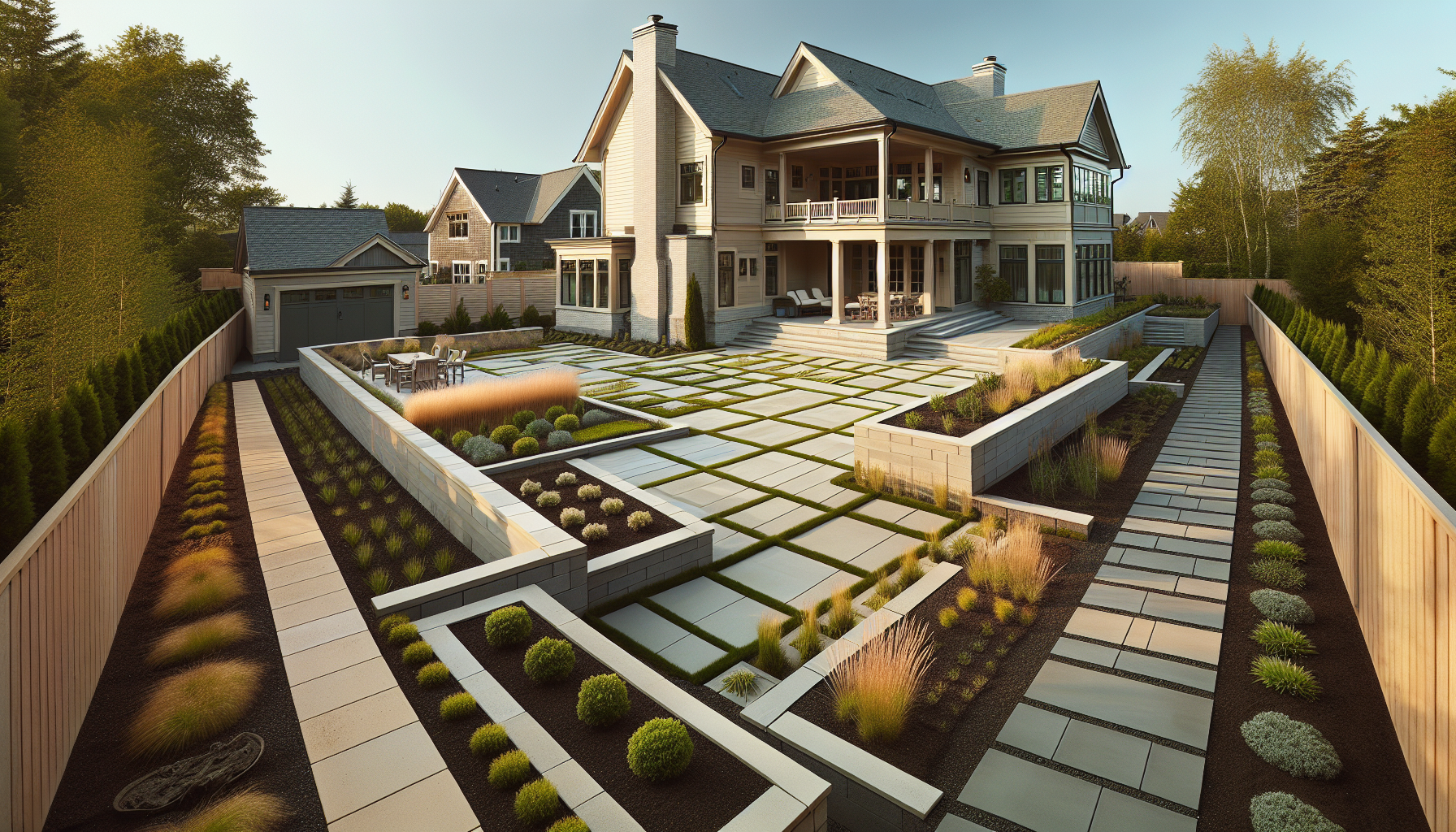
Feasibility First-Align Scope & Budget
For any project that expands your living space, a landscape hardscape plan with home addition must begin with budget clarity. Feasibility design is how we turn ambitions into attainable scope, especially when blending indoor expansion with thoughtful outdoor integration. Cost is a design input-not an afterthought. That’s why we always establish a financial baseline before developing solutions further.
Our feasibility design phase defines a clear budget before construction begins. We align scope, materials, and priorities with real costs so every decision is grounded in numbers-not guesswork.
In feasibility, we identify all opportunities: Do you want a seamless patio extension, custom walkways alongside your new addition, or integrated grading and drainage? Scope options are mapped to your lifestyle and long-term goals. We provide ROM pricing bands for each, such as comparing permeable pavers versus poured concrete, addressing how those material shifts impact your bottom line. Early value-engineering choices-like adjusting wall heights or limiting premium stone-are discussed transparently. This is where we define a preliminary cost baseline directly tied to the scope, minimizing downstream surprises.
Establish the budget in feasibility, then manage it actively through design. This disciplined process addresses the real costs of merging new indoor space with tailored outdoor improvements, so your finished environment works as a whole. As you explore the potential of a landscape hardscape plan with home addition, you control direction and investment before making lasting decisions.
If you’re considering more complex options such as second story additions or an expansive garden structure, our feasibility deliverables will compare each scenario side-by-side, spotlighting both cost and value.
Design with Cost Checkpoints
With the feasibility baseline established, we move forward refining your landscape hardscape plan with home addition through an iterative design process. Cost visibility remains central at every stage. As your ideas evolve-from broad garden concepts to precise walkways and retaining wall detailing-so does our cost monitoring.
Key Checkpoints for Cost Control
We institute cost gates at strategic milestones:
• After Schematic Design-Validating if the initial concept fits your investment level.
• After Design Development-Narrowing material selections, grading, and features, then updating estimates against the current scope.
• At approximately 50% Construction Documents-Translating sketches into specifics for contractors to price.
• At approximately 90% Construction Documents-Finalizing details for a tightly controlled pre-construction pricing exercise.
Each checkpoint confirms scope and priorities against your working budget. Whenever needed, value-engineering trade-offs-such as adjusting plant selection or simplifying wall finishes-are documented as conscious choices, never compromises forced by late-stage overruns.
Throughout detailed design, we treat the budget as a live document. Scheduled cost checkpoints at key milestones confirm scope against budget and capture value-engineering trade-offs.
Numeric Tightening Example
To illustrate, consider a hypothetical scenario: During the feasibility phase, a landscape hardscape plan with home addition is budgeted at €120k-€140k based on scope and material assumptions. By Design Development, as decisions mature, the range narrows to €132k-€136k. Upon reaching 90% Construction Documents-when all design choices are finalized-the estimate tightens to €134.8k. Price is locked before construction and before site mobilization. This trajectory ensures every decision is evaluated with its cost impact in mind, rather than reacting to budget surprises mid-project. This example is illustrative, not a guarantee, but it shows how disciplined checkpoints narrow uncertainty.
The benefit is straightforward: scope and cost remain aligned. Whether your focus is a modern patio outside a new bedroom or a sophisticated sequence of garden rooms anchored by your home addition, purpose-built cost tracking enhances design flexibility with controlled financial exposure.
For design solutions that integrate seamlessly with existing architecture, check out our architectural expertise and learn how we unify indoor and outdoor design visions.
Pre-Construction Price Lock
Once your landscape hardscape plan with home addition has been detailed and all selections finalized, we prepare for construction with precision. In this phase, we bring together final drawings, specifications, and clarified allowances-no assumptions or open-ended choices remain.
Before we start construction, we finalize drawings and specifications, clarify allowances, and lock the price on paper. This approach reduces owner risk and minimizes the need for contingencies.
We lock pricing before we mobilize. You receive a comprehensive, line-item proposal that covers hardscape components (patios, retaining walls, paths, steps), landscape materials, grading, drainage, and all relevant tie-ins to your new home addition. Fewer surprises, lower owner risk-because pricing is based on actual selections, not generalizations.
Final pricing reflects every aspect of your vision, from the masonry detailing to the exact plant palette. By securing this on paper before breaking ground, we minimize the potential for reactive changes or scope drift, enabling you to plan your reserve with full transparency. Right-size a modest reserve targeted to known unknowns, such as concealed site conditions, after design is complete.
Explore how this level of control supports seamless bedroom expansions at LivCo’s dedicated bedroom additions page.
Build with Confidence
When construction begins, our process translates finalized plans into reality-no surprises, no reactivity. The build phase is disciplined execution against the detailed documentation you helped shape. Scope is controlled through documented change management; any requested adjustments are tracked, priced, and approved before work proceeds.
The landscape hardscape plan with home addition unfolds as documented, not as a series of field improvisations. Execution follows the papered price, protecting your investment and vision. Unexpected issues, such as unknown soil conditions or legacy infrastructure, are addressed using the right-sized reserve established post-design.
Because every design choice is tied to industrial standards and costed in advance, project quality and budgetary discipline go hand-in-hand. Our proactive approach shields owners from cascades of extras and keeps all parties focused on intent. Limiting surprises and lowering risk, this methodology also helps preserve relationships among homeowners, designers, and contractors-keeping communication clear at every stage.
For additional insight into risk-managed remodeling, review our remodeling process for disciplined construction protocol.
Key Benefits of Merging Landscape and Hardscape with Your Home Addition
A cohesive landscape hardscape plan with home addition does more than beautify-it amplifies function, enhances property value, and simplifies future upgrades. When indoor expansion and outdoor enhancements are tackled together, critical infrastructure (like grading and drainage) serves both, minimizing redundant costs. Installation of retaining walls, steps, and plant beds in step with the addition helps avoid ad-hoc fixes later.
Building with confidence means you benefit from a custom environment designed for your daily life. Smart pathways, outdoor living spaces, and screened garden zones extend your usable space. Ready for more project clarity? Review the Texas A&M 12-Step Landscape Design Guide for a practical framework on integrating landscape and hardscape features with home additions.
Design & Materials for Lasting Value
Effective landscape hardscape plans with home additions rest on selecting materials and styles that align both aesthetically and functionally with your existing home. Choices range from patterned pavers, natural stone, low-maintenance composite decking, to regionally appropriate foliage. When designing, we consider future adaptability as well-can lighting, irrigation, or vertical green screens be added later with minimal disruption?
Design continuity matters: masonry choices echo the home’s architecture; plant varieties anchor the outdoor “rooms” to the addition’s intent. Whether you prefer clean lines or organic forms, our process ensures your landscape and hardscape look intentional, not appended.
Tips for Blending Seamlessly
To unify your new spaces, repeat materials or motifs; carry architectural features-like rooflines or trim details-into outdoor retaining walls and steps. Sync lighting and drainage plans from the outset. If privacy is a priority, handle grading and screening with the addition and hardscape all at once, minimizing rework and disruption.
Those pursuing second-story additions can especially benefit from early landscape hardscape planning, as downspouts, egress, and views all affect how hardscape meets the augmented façade.
Maintaining and Future-Proofing Your Spaces
A value-driven landscape hardscape plan with home addition accounts for long-term stewardship. We specify low-maintenance hardscape materials, draft irrigation plans to suit growing beds, and select plant material matched to site conditions. Durable finishes and clear documentation ease handoff to future landscapers or maintenance teams.
As life evolves, your outdoor spaces should adapt. We future-proof designs by planning for possible outdoor kitchens, fire pits, or guest suites now-even if you pause those features for a later phase. Grading, utilities, and access points are sized for upgrades, so you do not have to disrupt your existing investment down the road.
Schedule a feasibility consult to define your budget before you build.
“`
FAQ
Why is a landscape hardscape plan with home addition important?
A thoughtful plan ensures that your new home addition complements both your indoor and outdoor spaces. We prioritize integrating your landscape and hardscape so that spaces flow seamlessly. In addition, a smart plan improves curb appeal and functionality, making your home feel complete inside and out.
What benefits can I expect from merging landscape and hardscape designs?
Combining landscape and hardscape designs gives your home a cohesive look and maximizes its use. For example, patios, walkways, and gardens can be planned together to boost enjoyment and increase property value. Moreover, this approach reduces costly changes later and enhances accessibility for everyone.
How do we choose the right materials and styles for our project?
We recommend selecting materials that match your home’s architecture and personal taste. Additionally, it’s essential to consider durability and climate when choosing stone, pavers, or plantings. Our designers help you visualize different options, ensuring your landscape hardscape plan with home addition looks timeless and fits your lifestyle.
What tips do you have for blending hardscape with a new home addition?
To create a harmonious transition, we suggest continuing design elements from your addition to your outdoor spaces-like matching colors, textures, or lines. In addition, incorporating multi-level patios or planting beds can create depth and visual interest. Our team pays close attention to these details from the start.
How can I maintain and future-proof my landscape and hardscape?
Regular maintenance, such as sealing hard surfaces and pruning plants, keeps your outdoor areas healthy and beautiful. Moreover, choosing low-maintenance materials and planning for flexible spaces makes it easier to adapt your landscape as your needs change. We always take long-term care into account in our designs.