

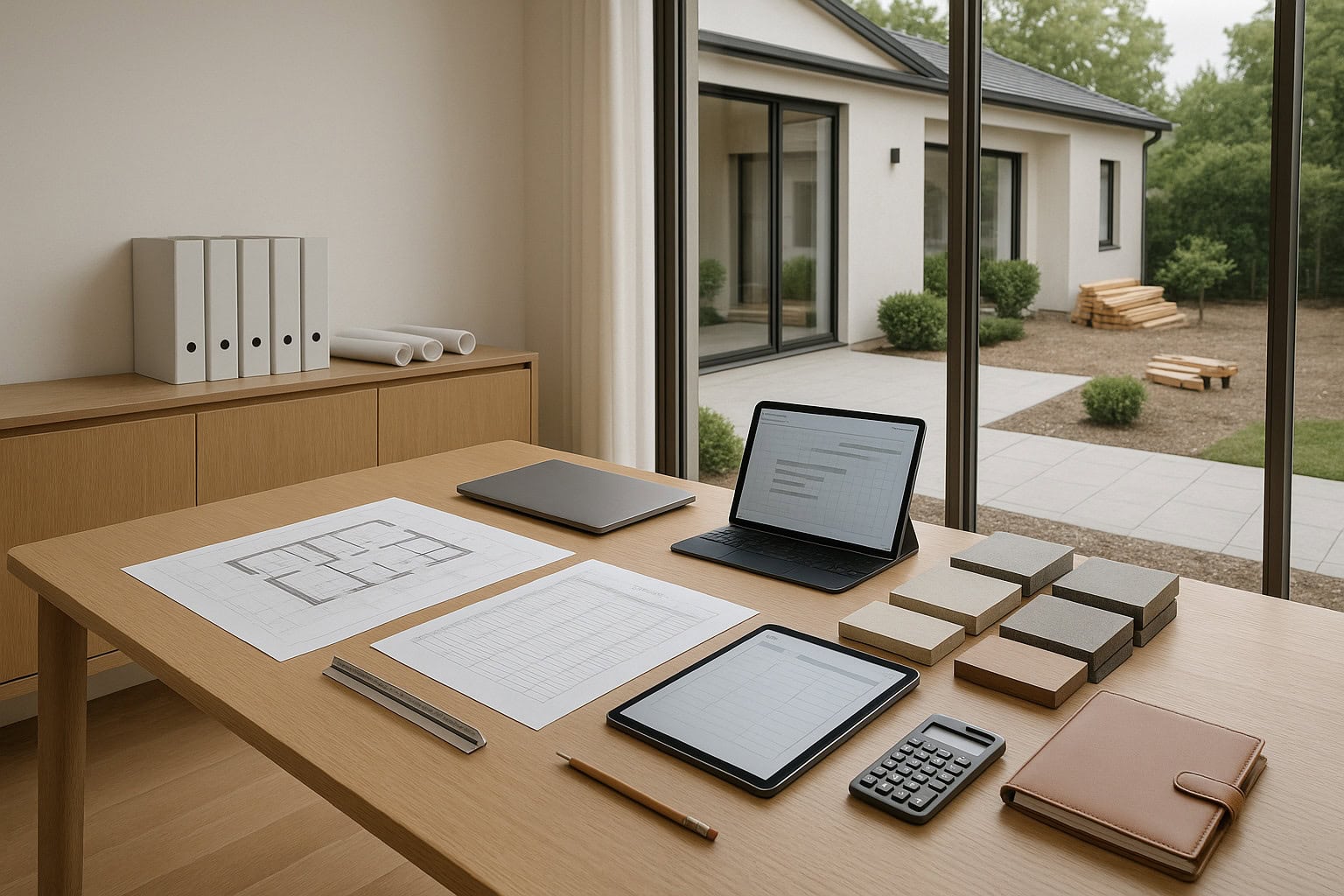
Feasibility First-Align Scope & Budget
In design build project management, feasibility design is where real project control begins. Before any materials are ordered or trades are scheduled, we define a realistic, data-driven budget. Cost must be treated as a core design input-not a late-stage afterthought. This mindset anchors the entire process, helping us avoid surprises and ensure projects remain viable as design progresses.
Our feasibility design phase defines a clear budget before construction begins. We align scope, materials, and priorities with real costs so every decision is grounded in numbers-not guesswork.
During feasibility, we don’t just sketch possibilities; we establish a robust baseline for every option on the table. Scope options are delineated early, supported by ROM (rough order of magnitude) pricing bands tailored to actual market conditions. For instance, if a client is considering an expanded kitchen versus a straight renovation, each scenario is scoped and preliminarily priced to expose outliers and clarify what’s possible within available funds. Early value-engineering choices are cataloged, so we can adjust materials or methods as needed before committing to drawings.
The result: a documented cost baseline, explicitly tied to scope. This core number establishes the project’s financial guardrails. From this point, every subsequent design and build decision is measured against this baseline. Establish the budget in feasibility, then manage it actively through design. Cost is a design input, not an afterthought. To discuss how a disciplined feasibility phase reduces risk and aligns everyone’s expectations, connect with us at LivCo.
Design with Cost Checkpoints
A disciplined design build project management process moves forward with cost checkpoints embedded at critical design milestones. Treating the budget as a living, dynamic document ensures every design decision remains realistic.
We schedule explicit cost gates to verify alignment between scope and budget and to record value-management trade-offs at each step. The checkpoints are:
After Schematic Design, our first cost review provides a reality check before major commitments are made.
After Design Development, we revisit scope choices, refine details, and tighten the budget range.
At approximately 50% Construction Documents, we update numbers to confirm pricing as specifications become more complete.
At approximately 90% Construction Documents, we have near-final numbers, capturing any last-minute updates before price lock.
Throughout detailed design, we treat the budget as a live document. Scheduled cost checkpoints at key milestones confirm scope against budget and capture value-engineering trade-offs.
Consider a hypothetical numeric tightening scenario for clarity. In feasibility, we might present a range: €120k–€140k. After Design Development, this narrows to €132k–€136k, reflecting choices about finishes and systems. Then, at 90% Construction Documents, pricing refines to €134.8k. We lock the price pre-construction, so the client has certainty before work begins. This example is illustrative, demonstrating how pricing is continually refined and locked in before mobilization-never a guarantee, but always a process grounded in facts.
At each checkpoint, value-engineering is not about sacrificing quality but about targeted alignment between needs and resources. For a closer look at how our design process integrates active cost management, visit LivCo Architecture + Design.
Pre-Construction Price Lock
As design-build project management moves from design to pre-construction, clarity is paramount. This is the point where scope, documentation, and financial control come together. Drawings and specifications achieve final form, making every detail transparent for the construction team and for you as the owner.
Critical in this phase: we clarify all allowances. If certain products or finishes remain undecided, realistic placeholders are assigned-never vague numbers. Every line item aligns with an up-to-date market quote, ensuring that the total cost picture is accurate, not assumed. Our teams work through any final value-engineering proposals, confirming with you before anything is set.
Before we start construction, we finalize drawings and specifications, clarify allowances, and lock the price on paper. This approach reduces owner risk and minimizes the need for contingencies.
We lock pricing before we mobilize. Fewer surprises, lower owner risk. This process is what sets disciplined project delivery apart: you sign a contract that matches your intent and expectations, backed by a tight and clear budget. Gone are the days of learning your true costs only after demolition begins.
We do not recommend budgeting during construction; instead, our pre-construction price lock limits unknowns. A modest reserve, specifically targeted to known unknowns like concealed site conditions, is right-sized after design is complete. Learn how our construction processes protect your budget at LivCo Remodeling.
Build with Confidence
Construction, in a disciplined design build project management environment, is plan execution-never budget discovery. Scope is locked, details are documented, and the financial plan is agreed upon before a shovel hits the ground. The build phase is about disciplined execution against finalized drawings, specifications, and the agreed-upon price.
Scope control is non-negotiable. Any requested change is documented, priced, and approved before proceeding. No surprises are introduced, and any modifications follow a transparent change management process. Because the budget was established early and continuously refined, the construction team is empowered to focus on quality and schedule, not cost firefighting.
Execution is measured and predictable. The reserves carried are right-sized specifically for true unknowns-never as a generic buffer. For instance, if a hidden utility line is discovered or soil conditions aren’t as expected, the reserve is ready, not excessive. This approach reduces owner risk, limits surprises, and minimizes the need for contingencies.
During construction, communication remains open. Progress is tracked against the finalized documents-not working drawings that are still changing. Any potential issue is addressed early through a documented process. Collaboration thrives when all participants have clarity on both costs and outputs, and that clarity is built in from feasibility onward.
For deeper insights into project delivery methods and definitions, consult the American Institute of Architects’ Primer on Project Delivery Terms.
Schedule a feasibility consult to define your budget before you build.
FAQ
What is design build project management and how does it work?
Design build project management is an approach where both design and construction services are handled by a single entity-like our team at Liv Companies. This creates a streamlined process, with designers and builders collaborating from the very beginning. As a result, we can reduce miscommunication and accelerate project delivery.
What are the main benefits of using design build project management?
Our clients experience several advantages with design build project management. For example, improved communication between teams, faster timelines, and early cost estimations give you greater confidence at every stage. Additionally, having one team means greater accountability and fewer delays during the project.
How can common project delivery challenges be avoided?
To overcome typical challenges, we focus on proactive planning and open communication. For instance, clarifying roles, setting clear expectations, and using modern management tools helps us minimize delays and unexpected costs. Consistent meetings also keep everyone aligned and the project moving forward.
What tools are recommended for effective design-build project oversight?
We utilize specialized project management software to enhance organization and transparency. Tools that allow for real-time updates, document sharing, and detailed scheduling are particularly effective. Moreover, these solutions enable everyone on our team-and our clients-to stay informed and engaged throughout the project.
How can collaboration be improved within a design build project?
Improving collaboration involves building strong relationships and encouraging feedback from all stakeholders. In addition, we prioritize regular check-ins, shared digital workspaces, and transparent communication. This holistic approach keeps everyone invested and ensures outstanding project results.