

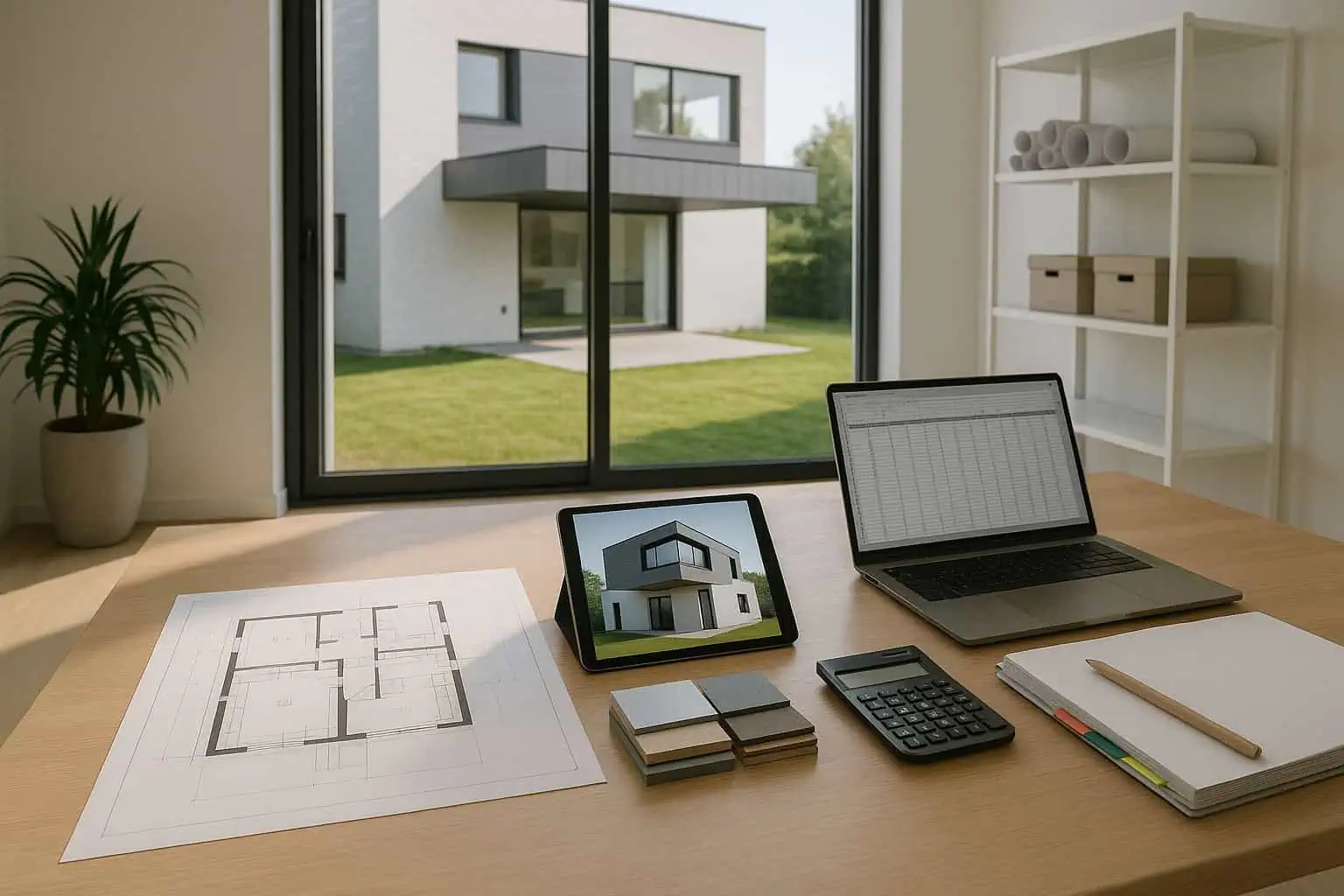
Feasibility First-Align Scope & Budget
For every cantilever home addition design, we begin by defining feasibility. Cost sits at the table from the start, not as an afterthought. We treat budget as a design input that informs every planning and engineering choice. Determining what is possible-and practical-for your home means starting with real numbers, right-sizing the ambition, and weighing the options before any drawings are inked.
Our feasibility design phase defines a clear budget before construction begins. We align scope, materials, and priorities with real costs so every decision is grounded in numbers-not guesswork.
When planning a cantilever extension, understanding possible scope is key. Changes to a home’s footprint, structural projections, or vertical additions all have different cost profiles. During feasibility, we explore scope options-from modest overhangs for extra living area to dramatic, multi-story cantilever designs-so you see each approach side by side. For each option, we provide rough order-of-magnitude (ROM) pricing bands. These broad estimates allow us to weigh trade-offs early, such as selecting steel over engineered lumber, or choosing between full-glass façades and more conventional window layouts.
Early in the process, we initiate value-engineering conversations. You may prioritize a certain architectural effect, specific room functions, or alignment to sustainable design. We analyze how those priorities impact budget, advising on trade-offs that keep ambitions and costs aligned. With every step, we document a preliminary cost baseline, matched to each defined scope. This cost clarity provides a foundation for responsible design development. Establish the budget in feasibility, then manage it actively through design.
Feasibility also clarifies structural realities. Cantilever home addition design projects rely on a clear understanding of how new loads interact with your home’s existing structure. We assess materials, code constraints, and connection points, considering possible engineering solutions before extensive design work. This prevents surprises and keeps your project on solid financial and structural ground.
Cost is a design input, not an afterthought. Curious about how cantilever extensions compare to other addition options? Explore alternatives such as second-story additions as part of feasibility scoping.
Design with Cost Checkpoints
Once feasibility is established, we guide you through a disciplined, cost-managed design process. Our method for cantilever home addition design builds cost checkpoints directly into every phase-ensuring scope, finish choices, and structural systems evolve in sync with the established budget. This approach reduces the risk of design drift, especially when introducing innovative elements such as projecting rooms, glass corners, or dramatic overhangs.
Designing with cost discipline is about more than documenting selections. It is an active process of checking, refining, and value-engineering at each critical milestone. For cantilever extensions, this diligence matters. These structures require careful coordination of form, engineering, and envelope detailing-making proactive cost management even more essential.
Cost Gates Within the Cantilever Design Process
We use four key cost gates during design:
After Schematic Design, we confirm that the initial concept aligns with your approved scope and budget bands. We flag cost drivers-such as long spans, premium cladding, or specialty glass-early, before investments mount.
After Design Development, as key details and material systems are clarified, a cost check ensures all selections still fit the established budget. Value-engineering remains open: Options are discussed, and final priorities are set with financial clarity in mind.
At approximately 50% Construction Documents, the design is refined enough to price with higher accuracy. Any open questions can be resolved by making timely trade-offs-perhaps revising a floating element or tuning façade materials for better ROI.
At approximately 90% Construction Documents, project pricing is extremely tight. Almost all variables are known and quantified, and the construction team can provide a firm contract price linked to the final plans and specifications.
Throughout detailed design, we treat the budget as a live document. Scheduled cost checkpoints at key milestones confirm scope against budget and capture value-engineering trade-offs.
Numeric Tightening-What It Looks Like in Practice
Consider this hypothetical scenario for a modern cantilever home addition design: In feasibility, the range is broad-€120k–€140k-based on competing priorities of glazing, finishes, and foundation upgrade needs. Through schematic design and into design development, as structural spans and materials are specified, the range narrows to €132k–€136k. As documents reach 90% completion, and every allowance and specification is clarified, the price tightens to €134.8k. At this stage, the price is locked pre-construction. This progression is illustrative, not a prediction, but exemplifies process discipline and controlled risk.
Design Feedback Loops
Managing the evolving budget is an interactive process. Stakeholders revisit design priorities and adjust selections based on cost data, ensuring each value-engineering decision is documented. This team-driven dialogue is essential for innovative extensions where structure, envelope, and spatial design must perform together within target costs.
If you are exploring design innovations for bedrooms or living areas, see specific solution types at LivCo bedroom additions.
Pre-Construction Price Lock
After active cost management through feasibility and design, your cantilever home addition design is ready for pre-construction price lock. Here, the project is transitioned from dynamic design to implementation-but only when key risks are controlled and all variables documented.
We finalize all drawings and specifications, ensuring every material, system, and finish has been selected. Allowances (for items like flooring, lighting, or exterior siding) are clarified, so all budgetary placeholders are known values. This comprehensive documentation enables our construction team to deliver a fixed contract price linked exactly to what has been designed and specified. We lock pricing before we mobilize.
Before we start construction, we finalize drawings and specifications, clarify allowances, and lock the price on paper. This approach reduces owner risk and minimizes the need for contingencies.
For our clients, this means fewer surprises, lower owner risk, and a disciplined handover from design to build. Even with bold concepts-such as multiple networked cantilever elements or integrated steel-and-glass overhangs-locking pricing before site work protects your investment. Reserves are targeted, not generic. We right-size a modest reserve targeted to known unknowns, such as concealed site conditions, after design is complete. This keeps your financial exposure clear and controlled, rather than sliding into reactive mode after construction starts.
Explore our architecture and design services to see how detailed documentation adds value and clarity to projects before ground is broken.
Build with Confidence
Construction is not a budget discovery phase-it is disciplined, documented execution of your approved cantilever home addition design. We control scope by tying every on-site activity back to finalized drawings, specifications, and the locked price. Any requested changes, additions, or field discoveries follow a documented change management process, evaluated for both cost and schedule implications before moving forward. This is essential for projects with complex structural geometry, overhanging rooms, or challenging site logistics.
Throughout the build phase, our superintendents and project managers execute the plan with vigilance. Quality benchmarks, milestone reviews, and signoffs ensure what is built matches the approved documents-and paid price. Scope creep is prevented, not managed after-the-fact. Right-sized reserves are held for known unknowns (for example, a concealed beam or unexpected soil condition) but not for general, unspecified risk. This approach limits surprises, reduces owner risk, and keeps contingency requirements minimal and intentionally scoped.
Ready to discuss how this disciplined process limits your exposure? Consider a feasibility consult focused on your unique risks and priorities, before you invest in full design.
How Cantilever Home Addition Design Maximizes Benefits
A well-executed cantilever home addition design offers more than visual drama. By projecting living space outward-without the need for new foundations below-these extensions capture area and light with minimal impact on the ground plane. Homeowners often use cantilever additions for expanded living rooms, new bedrooms, or dramatic glazed corners. Done right, these additions create new openness and functionality while preserving yard space below.
Cantilever designs also enable “networked” expansions: multiple overhanging wings joined by glass bridges, connecting zones, or floating lofts. These coordinated extensions require careful structural engineering, robust weather detailing, and meticulous cost management-perfectly suited to our cost-first, risk-managed process.
Material and Structural Considerations
Material selection is tightly linked to performance and budget in every cantilever home addition. Engineered wood beams can offer cost-effective spans for modest projections. Structural steel is often chosen for longer, heavier cantilevered rooms, but comes at a higher price point and requires detailed coordination with building envelope systems. High-performance glass, advanced weather membranes, and insulation strategies support year-round comfort but must be value-engineered for ROI.
Structural analysis is essential. Loads from the extension are transferred back to the existing structure, which often requires reinforcement or clever integration of new beams, posts, or foundations. For detailed insight into what structural diligence entails for home additions, the article Structural Considerations for Home Additions breaks down code, material, and risk management best practices.
Design Ideas and Future Trends
Current cantilever home addition design trends include panoramic glass corners, green-roof overhangs, and eco-conscious material selections. Energy-efficient assemblies and smart-home integrations are common features. Looking ahead, we anticipate continued development in modular steel frame systems, advanced envelope technologies, and even increased use of biogenic materials for lightweight, carbon-minimized structures. Select clients are exploring networked cantilever additions for homes-multiple projecting elements, sometimes with different uses (e.g., a floating office and an elevated playroom), connected by glass links or stairbridges.
As design and material technologies evolve, our cost-driven, risk-conscious process adapts with them. If you’re curious about how current innovations can be paired with disciplined budgeting in your next project, let’s start the conversation early.
Cost Factors and Risk Management in Cantilever Extensions
No two cantilever home additions present the same risk profile. Major cost factors include span length, structural material, facade choices, integration with the existing home, mechanical system upgrades, and site work. Projects over older foundations, sloped sites, or that affect major utilities may trend higher in cost. In contrast, compact, modest projections built over reinforced perimeter walls often represent more favorable financial profiles. With cost and risk established up front, we actively manage exposure-not reactively absorb overruns.
To further limit risk, our process right-sizes reserves based on scope clarity and known site conditions after design completion. If concealed conditions or code upgrades are possible, we’ll discuss and document those risks before ground is broken, reducing after-the-fact surprises.
Ready to explore the possibilities? Schedule a feasibility consult to define your budget before you build.
FAQ
What is cantilever home addition design?
Cantilever home addition design refers to an architectural solution where a structure, such as a room or balcony, projects beyond its foundation or support. At Liv Companies, we use structural engineering to extend living spaces without the need for additional ground-level supports, offering both style and practical expansion.
What are the main benefits of a cantilever extension?
Many homeowners opt for cantilever extensions due to their ability to create more usable space and maximize views. In addition, these designs require fewer ground supports, making them an ideal choice when site conditions are challenging or when you want to preserve landscaping.
How does a cantilever design enhance my living space?
By projecting rooms outward, cantilevered additions open up interior layouts and allow for natural light to flood your home. Moreover, we can create design features like window walls, cozy alcoves, or floating corners that connect indoor and outdoor living seamlessly.
Which materials does Liv Companies recommend for cantilever home additions?
We often utilize materials such as steel beams, engineered wood, and high-performance insulation to ensure strength and lasting durability. In addition, integrating glass and sustainable finishes allows us to match your specific vision and aesthetic preferences.
What factors affect the cost of a cantilever home addition?
Various factors play a role, including the size and complexity of the extension, materials chosen, and any specific site challenges. For example, unique shapes or intricate designs can require more advanced engineering. Our team will guide you through a detailed estimate, helping you prioritize must-have features for your budget.