

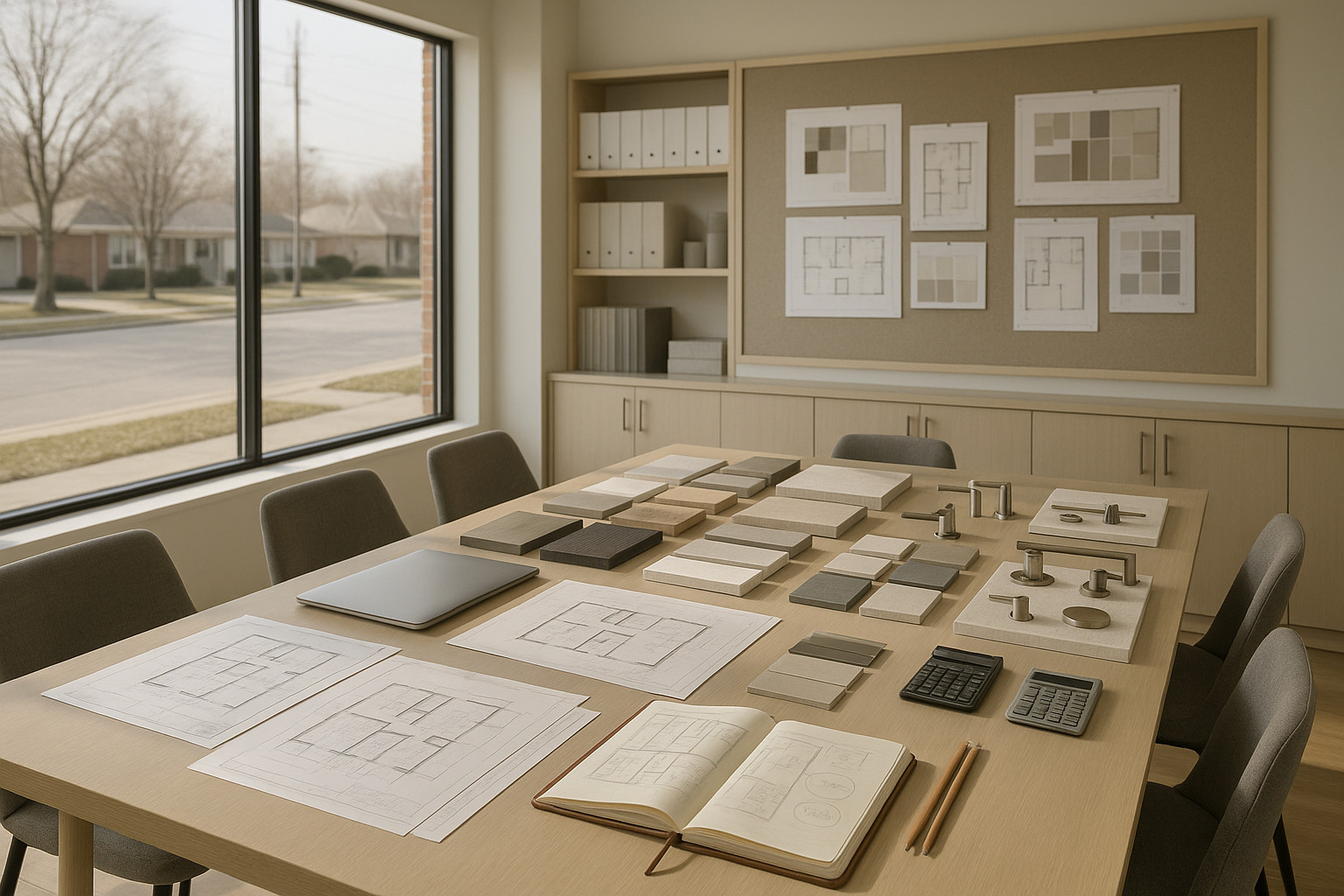
Feasibility First-Align Scope & Budget
Home renovation material planning always begins with feasibility. Not as an afterthought, but as a foundational design input. Before exploring style, finish, or product, we define the project’s realistic investment case. The core of successful home renovation material planning is a feasibility design process that clarifies costs up-front, mapping project scope, priorities, and aesthetic ambitions to tangible budget realities.
Our feasibility design phase defines a clear budget before construction begins. We align scope, materials, and priorities with real costs so every decision is grounded in numbers-not guesswork.
At LivCo, feasibility isn’t just about theory. We take your vision and translate it into scope options for your home. This includes a range of targeted solutions-maybe a full kitchen overhaul, an owner suite refresh, or a lower-level finish-each presented with real options for material types and detailing. Next, our team develops ROM (Rough Order of Magnitude) pricing bands for each scope: realistic cost ranges, informed by current supply costs and construction climate. For example, we’ll show €110k to €130k for full kitchen renovation using locally available custom cabinetry and durable quartz, and then €85k–€100k for more value-engineered materials.
We also highlight early value-engineering levers in feasibility: alternative flooring technologies, simplified millwork, or optimizing tile layouts to cut waste. This is where we help you recognize major cost drivers and focus material choices on what moves the budget. The result? A preliminary cost baseline directly tied to what you want to accomplish-enabling focus and discipline from day one. Establish the budget in feasibility, then manage it actively through design. Cost is a design input, not an afterthought.
Our experience with many renovation types shows that informed feasibility discussions deliver substantial benefits: fewer surprises, stronger material planning, and early clarity about which finishes, fixtures, and systems deliver the most value per dollar invested. The goal is building an actionable foundation-one that supports disciplined material planning and sets realistic expectations for the entire project lifecycle.
Design with Cost Checkpoints
Material choices-and their costs-do not exist in a vacuum. Instead, effective home renovation material planning unfolds through an iterative, milestone-driven design process, where cost checkpoints validate that scope and selections remain aligned to your real-world investment boundaries. This creates a closed-loop system, where design creativity and budget management are inseparable, not adversarial.
We structure explicit budgetary reviews at these pivotal design phases:
• After Schematic Design
• After Design Development
• At approximately 50% Construction Documents
• At approximately 90% Construction Documents
Throughout detailed design, we treat the budget as a live document. Scheduled cost checkpoints at key milestones confirm scope against budget and capture value-engineering trade-offs.
Every checkpoint keeps the renovation on track, locking in material impacts and documenting all choices. Say, after Schematic Design, we price the current plan and flag that imported tile in the main bath would push budget over the top. The value-engineering trade-off could be shifting to a high-quality domestic tile, allowing us to retain the aesthetic punch without blowing the budget. Similarly, after Design Development, every fixture, finish, and system specified is revisited to ensure they still align with both budget and performance goals.
Hypothetical Numeric Tightening Example
For illustration: suppose your feasibility study gives a cost band of €120k–€140k for your project. As design work advances, we periodically update and refine material specifications and precise scope impacts.
• Feasibility: €120k–€140k
• Design Development: €132k–€136k
• 90% Construction Documents: €134.8k (price locked pre-construction)
This process enables early identification of areas where scope or materials need realignment, driving towards a pre-construction price that is both realistic and specific. This tightening is hypothetical, not a guarantee, but it exemplifies disciplined budget refinement at every phase.
These checkpoints are relevant even in focused areas. On kitchen remodels or primary suite upgrades, each step-cabinet selection, countertop slab sourcing, appliance tiers-directly impacts final cost. Aligned checkpoints ensure each choice is weighed against the budget baseline, never letting material substitution or expansion subtly erode investment discipline.
Common Material Planning Mistakes to Avoid
Through hundreds of home renovation material planning cycles, we’ve seen certain pitfalls recur: skipping feasibility in the rush to design, assuming allowances will stretch, delaying big-ticket material decisions, and undervaluing lead times or supply chain risks. Our process-feasibility to price lock-systematically combats each of these issues. When scope, finish, or specification adjustments become necessary (as they often do), the active use of cost checkpoints keeps everyone working toward the same target and minimizes reactive, crisis-driven compromises.
Pre-Construction Price Lock
The clarity forged in the prior two stages is brought to its full potential during pre-construction price lock. At this point, all essential drawings, specifications, and schedules are completed. Every primary finish, fixture, and system has been documented-and late-stage choices resolved. All allowances (budgets for future-site selections, such as unknown tile patterns or lighting packages) are clearly itemized, never left hazy.
Before we start construction, we finalize drawings and specifications, clarify allowances, and lock the price on paper. This approach reduces owner risk and minimizes the need for contingencies.
Pre-construction price lock is where discipline pays off. We lock pricing before we mobilize. Fee structures, material escalation clauses, and long-lead purchases are agreed upon on paper, not on the job site. Fewer surprises, lower owner risk. Allowances for select items are limited and defined, not broad catch-alls. Our aim is to minimize dependency on field contingencies or open-ended budgets, delivering certainty you can trust.
The impact: both renovation and architecture and design clients begin construction understanding exactly what is being delivered, at what cost, and with what material standards. This clarity protects against ambiguous upgrades, material substitutions under duress, and runaway change orders.
Choosing the Right Materials and Streamlining the Process
At this stage, material selections are finalized according to three pillars:
• Project vision and compatibility with overall design intent
• Durability, maintainability, and code compliance
• Availability and supplier reliability relative to schedule
By fixing material decisions before mobilization, the process is streamlined: suppliers are engaged early, long-lead items are secured, and our build calendar is protected from last-minute delays. Aligned with resources from leaders in the field, such as the AIA Framework for Design Excellence, our approach ensures every material is specified with mindful consideration of best practices and sustainability.
Streamlining means we preemptively resolve supply risks, adjust for volatile commodity pricing where prudent, and deliver material orders tied directly to the locked construction documents. We also provide clients with clear substitution protocols up-front, so if market conditions shift, changes are managed without impacting cost security.
Budgeting Tips for Material Planning
Resist assumptions that last-minute bids or ad hoc substitutions create savings. They usually add risk and delays. Instead:
• Make major finish and fixture choices before price lock, not after
• Use targeted reserves after design is complete-typically 3–7% for known unknowns like hidden plumbing issues or concealed structural surprises
• Document every material as an item on the schedule of values, so scope control persists throughout construction
This rigorous approach equips you to navigate fluctuating material costs and supply chain variables with confidence.
Build with Confidence
Construction, done right, is the precise execution of what has already been agreed upon-with full scope, finish, and cost control locked in before breaking ground. With disciplined home renovation material planning, the construction phase is no longer one of budget discovery but of coordinated delivery. Materials are ordered to specification, trades are scheduled to exact scopes, and all participants are working from the same documented plan.
True scope control begins here. Every requested change is subjected to documented change management-clarifying cost and schedule impacts before any commitment is made. Material substitutions are reviewed openly, protecting your priorities, and ensuring that rapid field decisions do not undermine the hard-fought budget certainty already established.
Throughout the build, our process enforces cost discipline: any issues uncovered-such as concealed conditions-are addressed with a targeted, right-sized reserve set aside after design is complete. Not with broad contingencies, but with intentional, data-informed allowances for the “known unknowns” that sometimes arise. This approach reduces owner risk, limits surprises, and minimizes the need for contingencies.
The result: your investment is safeguarded, value-engineering is handled on paper (not reactive in the field), and your material selections are delivered as specified. Our clients in complex basement remodels and multi-phase interior upgrades consistently report that this process-centered approach delivers not only better budget outcomes but a less stressful journey from concept to completion.
Expert Advice on Home Renovation Materials
With every project, we leverage deep supplier relationships and continually monitor shifts in material quality, availability, and price. Our cost-first, risk-mitigated advice includes:
• Prioritizing materials with strong warranties and proven lifecycle performance over short-lived trends
• Weighing operational savings (energy/water/maintenance) when selecting mechanicals, windows, and finishes
• Securing substitute recommendations in advance, should key selections become unavailable
We encourage our clients to view materials not just aesthetically but as part of an integrated investment plan-a strategy guided by disciplined planning and validated by cost checkpoints. Approaching home renovation material planning this way protects your investment, streamlines your process, and mitigates surprises.
Schedule a feasibility consult to define your budget before you build.
FAQ
Why is home renovation material planning essential for a successful project?
Proper home renovation material planning ensures a smooth process from start to finish. By anticipating your needs, you can avoid costly delays and unnecessary stress. Moreover, well-organized planning helps keep your renovation on budget and allows you to make informed choices about quality materials.
What are common mistakes to avoid during material planning for home renovations?
Many homeowners underestimate the importance of thorough planning. For example, not measuring spaces correctly, forgetting to check availability, or failing to compare material options can lead to issues later. In addition, not setting aside a contingency budget often results in overspending.
How can we choose the right materials for a home renovation?
We recommend considering both functionality and style. Start by identifying materials that suit your daily needs and lifestyle. Next, factor in durability, maintenance requirements, and cost. Consulting with design professionals also ensures you make choices that stand the test of time.
What steps should we follow for effective home renovation material planning?
Begin with a clear vision of your renovation goals. Create a detailed list of all required materials, research suppliers, and compare prices. In addition, seek advice from renovation experts and set a timeline for ordering and delivery. Taking these steps can help prevent last-minute surprises.
How can we stay within budget when planning materials for our renovation?
First, set a realistic budget that includes a buffer for unexpected expenses. Track all material costs, and prioritize essential items over nice-to-have extras. Moreover, planning purchases during sales or considering alternative materials can help keep your renovation affordable.