

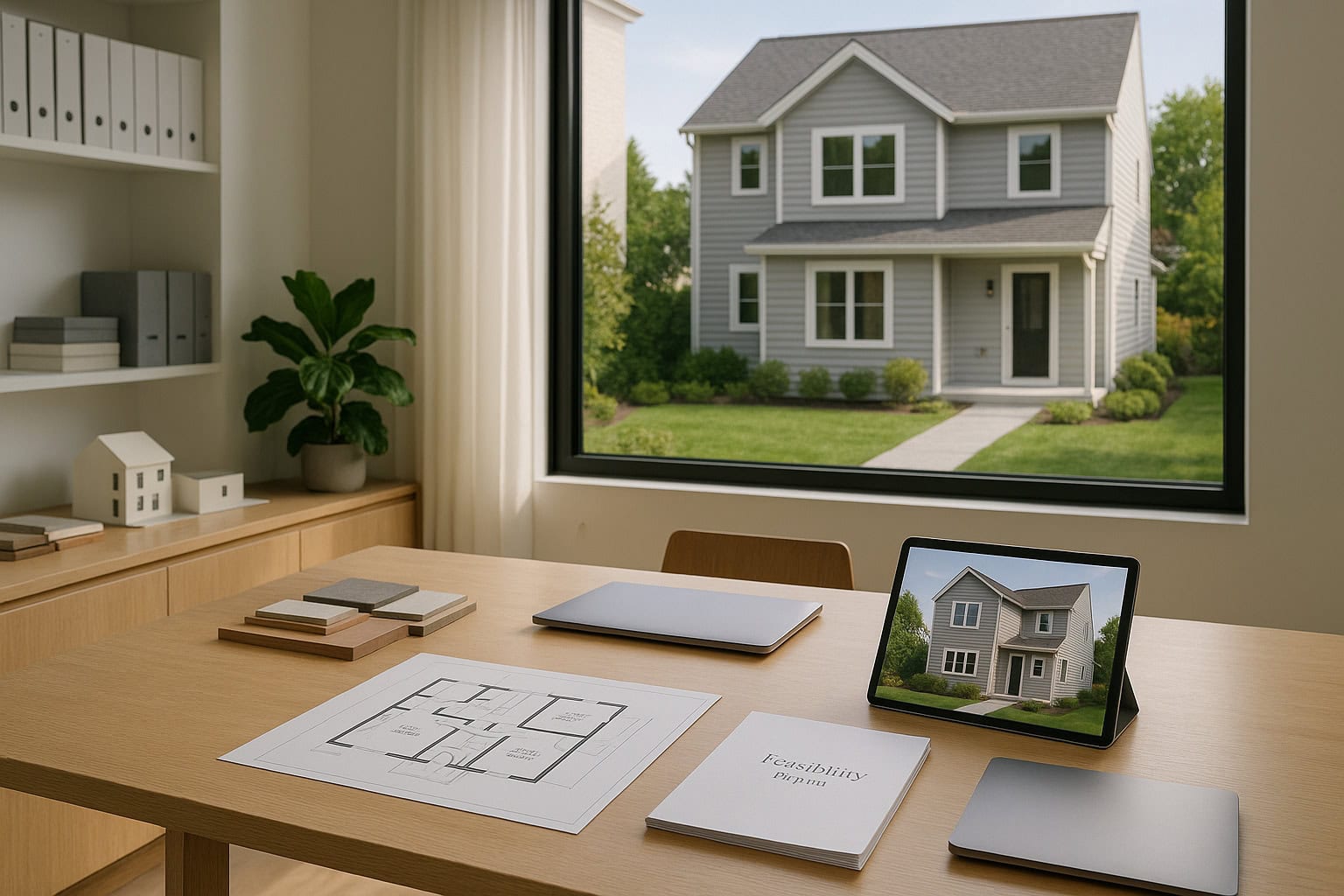
Feasibility First-Align Scope & Budget
Integrating an in law suite addition into your home is a significant investment-one that must start with a clear, disciplined feasibility design process. At LivCo, we believe the most successful projects begin by aligning the scope, materials, and priorities with your financial reality. Treating cost as an input to design-rather than an afterthought-lays the foundation for a multi-generational living solution you can truly afford.
Our feasibility design phase defines a clear budget before construction begins. We align scope, materials, and priorities with real costs so every decision is grounded in numbers-not guesswork.
In the feasibility stage, we explore different scope options, such as whether the in-law apartment addition will be attached or detached, how many bedrooms and bathrooms are required, and what level of kitchen facilities are needed. For each configuration, we provide ROM (Rough Order of Magnitude) pricing bands to give you a true sense of potential investment. Early value-engineering choices-like finish level, mechanical layouts, and space planning-are identified, with costs clarified for each scenario.
This preliminary cost baseline becomes the metric against which every subsequent design decision is measured. By establishing the budget in feasibility, then managing it actively through design, we keep expectations grounded and reduce the risk of unpleasant surprises later. Cost is a design input, not an afterthought.
For example, perhaps a client is considering both an attached and freestanding extended family suite. The feasibility report provides a side-by-side comparison including construction access, utilities routing, permitting risks, and ROM pricing, e.g., €125k–€145k for attached vs. €130k–€155k for freestanding. You enter design phases with a defined investment strategy, not rough guesses.
A careful feasibility process supports both family planning and financial security for your in law suite addition. It lets us deliver a preliminary cost baseline that’s aligned to your real needs-making the rest of the journey fact-based and transparent.
Design with Cost Checkpoints
With a feasibility-driven cost baseline in place, we move into detailed design. At LivCo, we insert cost checkpoints at set milestones, treating the budget as a dynamic, living document. In every project, especially for in law suite additions, these gates keep stakeholders and decision-makers informed, promote value-engineering trade-offs, and lock design evolution to budget reality.
Explicit Cost Gates
We align cost checkpoints with project milestones:
After Schematic Design, we review all major layouts, functional zones, and access points, instantly matching design ideas with current construction costs. Following Design Development, we check systems, finishes, and detailed layouts against the budget-course-correcting if value needs balancing or certain priorities must shift.
The next key gates are at approximately 50% Construction Documents-where most technical content is drafted-and again at 90%, when almost-all selections and specs are finished. At each stage, we confirm scope versus budget and document transparent, value-engineering choices. This approach lets you see, in real time, how every decision impacts cost.
Throughout detailed design, we treat the budget as a live document. Scheduled cost checkpoints at key milestones confirm scope against budget and capture value-engineering trade-offs.
Numeric Tightening Example
Consider a hypothetical scenario for a main floor mother-in-law suite addition:
Feasibility: €120k–€140k → Design Development: €132k–€136k → 90% Construction Documents: €134.8k (price locked pre-construction). This example illustrates how we start with a wide band, then refine and tighten ranges as selections become final, culminating in a locked value before any site work begins.
This structured process is not a guarantee-the numbers above are for illustration-yet it demonstrates our commitment to continuous transparency. You see how decisions influence the final cost, empowering you to make informed choices at every checkpoint.
LivCo’s design-led approach serves both design excellence and cost control. Access the latest in efficient layouts, privacy planning, and code compliance for your in law suite addition-all within a process that keeps budget at the center.
For more on integrating architecture and detailed design into your project, visit LivCo Architecture & Design.
Pre-Construction Price Lock
Once design is complete, the most critical transition occurs: locking the price on paper before any work starts. All drawings, specifications, finishes, and allowances for the guest suite addition are finalized by this stage. Our team engages with vendors and trade partners to clarify costs and scope down to the final detail.
We lock pricing before we mobilize-meaning before the first hammer swings, the price is set, allowing you to plan confidently. This process reduces owner risk, limits surprises, and minimizes the need for contingencies.
Before we start construction, we finalize drawings and specifications, clarify allowances, and lock the price on paper. This approach reduces owner risk and minimizes the need for contingencies.
Through this disciplined phase, every material and allowance is scrutinized, from specialized aging-in-place fixtures to separate HVAC systems or sound-insulated partitions. Nothing is left ambiguous. Your price is fixed before construction-offering both clarity and peace of mind.
Curious about our thorough pre-construction process or want to see real projects in action? Explore LivCo Remodeling for inspiration.
Build with Confidence
Construction for an in law suite addition should be disciplined execution, not budget discovery. At this point, the final documentation guides our team and all trades-ensuring the scope matches the price you were shown. Construction managers enforce documented change management protocols, so any owner requests are handled transparently and linked to documented costs.
We focus on scope control and execute precisely as documented. Any adjustments are addressed using a formal process, and the price you locked pre-construction remains the baseline. This strategy limits risk, reduces surprises, and allows owners to right-size a modest reserve targeted to known unknowns, such as concealed site conditions, after design is complete. By acting on paper, not on site, we make construction predictable.
You gain peace of mind, knowing that the budget, selections, and specifications decided before construction began will drive the entire build process. The result? A finished secondary suite or accessory dwelling unit (ADU) that delivers on comfort, privacy, and security-with minimal cost uncertainty.
If you are investigating whether an in law suite addition aligns with your existing home, our team encourages you to contact LivCo for a consult. We help set expectations and clarify every step before you make commitments.
What Drives a Successful In Law Suite Addition?
Why choose to build an in law suite addition? Many families look for new ways to support aging parents or adult children while preserving comfort and independence. A well-designed suite provides both private quarters and integration with the main home, resulting in a responsible, future-proof investment. According to the National Association of Home Builders, the demand for accessory dwelling units is steadily growing as multigenerational living gains acceptance.
The top benefits of a dedicated in law suite include family proximity, increased resale potential, and flexibility for changing living arrangements-all while controlling ongoing monthly costs compared to assisted living or external rentals. Planning for accessibility, private outdoor access, and self-contained mechanicals (such as kitchenettes and laundry) enhances functionality.
For examples of bedroom suite integrations or to see how a new suite can complement your home’s value, take a look at LivCo Bedroom Additions.
Design and Cost Considerations
Designing your in law suite addition requires balancing comfort and practicality with your investment. Carefully consider natural light, accessibility features like zero-threshold showers and wider doorways, sound separation, climate control, and independent egress. These choices carry cost implications-another reason to tie every design move back to live pricing checkpoints.
In our experience, the most successful projects start with a clear understanding of the existing home structure, zoning regulations, and code requirements for secondary units. By focusing early on site analysis and integrating accessory dwelling needs into design, we minimize surprises and keep the project on track, both financially and functionally.
Making the Most of Your New Space
Once your project is built according to plan, the flexibility and function of an in law suite addition become fully apparent. Whether your family situation changes or your needs evolve over time, this separate living area can serve as a rental, guest apartment, or future caregiver’s quarters.
Strategic planning at every project phase-feasibility, design, pre-construction, and disciplined build-out-ensures your investment brings lasting value. With the right approach, you create a space that adapts as your circumstances shift, making your home future-ready and resilient.
We invite homeowners to schedule a feasibility consult to define your budget before you build. Our process-driven, cost-first approach ensures your in law suite addition fits both your financial goals and your family’s needs.
FAQ
Why should we consider an in law suite addition for our home?
Adding an in law suite offers flexibility for multi-generational families, providing privacy and comfort for everyone. With changing family needs in 2026, many homeowners find these additions enhance both property value and quality of life. Moreover, it allows loved ones to stay close while maintaining independence.
What are some key steps in planning for an in law suite addition?
Start by identifying your family’s needs, such as accessibility or extra amenities. Next, consult with a professional design-build team like ours to ensure local codes and permits are addressed. Additionally, consider long-term uses, as these suites can double as guest rooms or home offices in the future.
What are the top benefits of adding an in law suite?
An in law suite can improve family unity, offer flexible living arrangements, and increase home value. Furthermore, it creates a comfortable space for guests or caregivers, enhancing your home’s functionality. Many clients appreciate the added privacy and convenience.
How can we design a comfortable and functional in law suite?
We recommend focusing on features like a private entrance, soundproofing, and accessible bathrooms. For example, open floor plans and natural lighting can make the space feel inviting. Don’t forget to personalize the suite to ensure comfort for both current and future uses.
What costs should we expect when planning an addition for extended family?
Costs will vary based on size, materials, and customization. In addition, expenses may include permits, utility upgrades, and design services. At Liv Companies, we help you create a clear budget from the start, ensuring a smooth and stress-free process.