

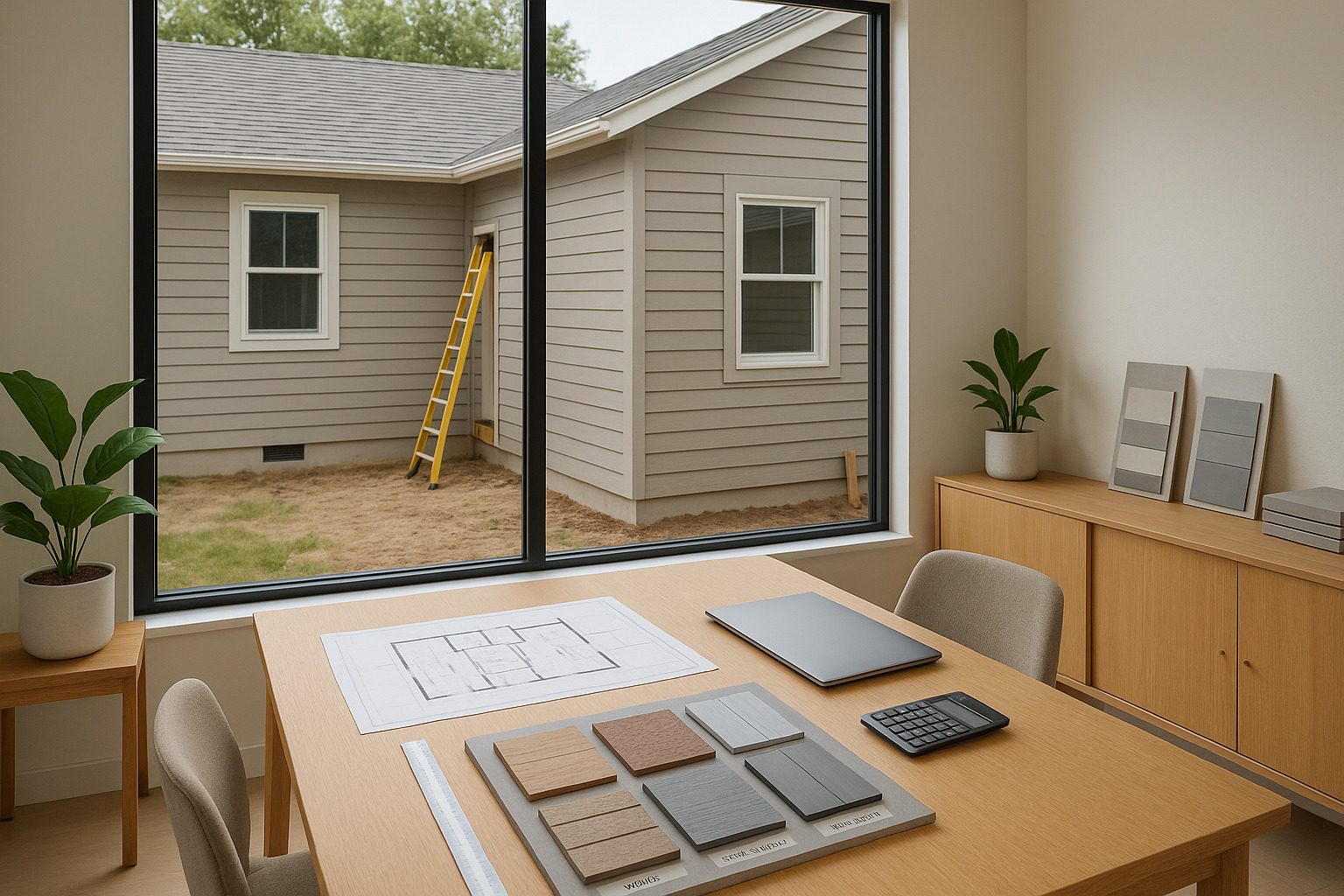
Feasibility First-Align Scope & Budget
In every successful home improvement project, especially when adding space to your home, cost must be a design input-never an afterthought. Nowhere is this more evident than with a matching exterior cladding addition. Feasibility design establishes a realistic budget, ensuring you know exactly what it takes to deliver a seamless exterior before construction begins. Setting this cost foundation early controls risk and clarifies the path forward for your addition.
Our feasibility design phase defines a clear budget before construction begins. We align scope, materials, and priorities with real costs so every decision is grounded in numbers-not guesswork.
The first step is to identify your goals for the exterior. Is full visual continuity your top priority, or does a complementary, value-engineered approach suit your needs? Within feasibility, we walk through scope options-such as connecting rooflines, matching every detail, or prioritizing major facades. We then provide ROM (rough order of magnitude) pricing bands for each path, rather than one static allowance. For example, simply replicating existing siding is one price bracket-but custom-matching historic details escalates investment ranges.
Early value-engineering choices also come into play. Should we match existing materials one-for-one, or is there a comparable, more cost-effective cladding that delivers similar aesthetics from curb view? These discussions lead to establishing a preliminary cost baseline tied directly to your chosen scope. Establish the budget in feasibility, then manage it actively through design.
Defining your design vision for a matching exterior cladding addition with clear financial guardrails up front minimizes downstream surprises and puts you in control.
Design with Cost Checkpoints
Once feasibility defines your investment and scope, we move into detail-always with live cost checks as guardrails. Design for a matching exterior cladding addition is intricate: material transitions, joint alignments, and finish texture all must blend old with new. But every detail must answer to the budget before it appears in construction documents.
Throughout detailed design, we treat the budget as a live document. Scheduled cost checkpoints at key milestones confirm scope against budget and capture value-engineering trade-offs.
Key cost gates during design are:
After Schematic Design, we revisit options for exterior finishes, documenting the impact of different materials, orientations, and trim packages. After Design Development, we specify product lines and obtain updated bids from suppliers, tightening cost ranges. At approximately 50% Construction Documents, we assess for any scope creep and re-align decisions if necessary. At approximately 90% Construction Documents, the scope, specifications, and price reach near-final clarity, minimizing exposure to later overruns.
Numeric Tightening: A Hypothetical Example
Let’s illustrate this with an example. In feasibility, say the ROM price band for a matching exterior cladding addition is €120k–€140k. During Design Development, detailed design narrows this to €132k–€136k as we confirm product selections with suppliers. By 90% Construction Documents, shop drawings and detailed takeoffs pin the number at €134.8k-with price lock occurring before mobilization. This path demonstrates design-phase tightening, not post-hoc discovery. It is hypothetical, for illustration, and does not imply or guarantee your outcome. But it shows how cost focus across design stages removes guesswork.
By structuring design with cost checkpoints, we enable informed decisions on exterior materials, connection strategies, and finish options-delivering a seamless appearance as cost-effectively as possible.
If you’re considering a bedroom, second-story, or mudroom addition, these same checkpoints ensure exterior finish alignment fits inside your process and budget. Explore scope avenues at second-story, mudroom, or bedroom additions.
Pre-Construction Price Lock
A matching exterior cladding addition requires utmost clarity before construction activity begins. This phase centers on finalizing every drawing and finish specification down to the inch-aligning product orders, identifying transitions between existing and new cladding, and clarifying every detail. Allowances move from generic estimates to clearly defined quantities and brands.
Before we start construction, we finalize drawings and specifications, clarify allowances, and lock the price on paper. This approach reduces owner risk and minimizes the need for contingencies.
We lock pricing before we mobilize. All suppliers are coordinated, installation methods are vetted, and the interface plan for abutting new cladding to existing walls is dimensionally confirmed. There are fewer surprises and lower owner risk. You move forward with documented decisions, not best guesses. Product lead times, color batch controls, and specialty finishing details are all captured in writing, syndicating expectations across the build team.
At this stage, we recommend right-sizing a modest reserve targeted to known unknowns, such as concealed site conditions, after design is complete-not as a default buffer for design-stage indecision.
For detailed, technical background on best practices for matching and fire-rated exteriors, consult resources like the WoodWorks research on exterior walls.
Build with Confidence
With our cost-driven process, construction becomes disciplined plan execution-not budget discovery or field improvisation. Our approach to a matching exterior cladding addition enforces scope control at every step. We leverage shop drawings and pre-approved mockups to ensure new exterior finishes mirror your existing home, or achieve the best visual alignment within the allowed budget.
Change management is clearly documented. If you choose to alter a detail midstream-switching from lap siding to shingle, for example-it’s fully priced and approved before work shifts. This transparency limits owner risk and minimizes the need for post-launch contingencies. Scope changes are not surprises; they are choices, tracked in writing and reconciled with the price previously locked.
Installation Process and Material Considerations
Installing a seamless exterior addition requires strict adherence to details: matching exposure patterns, controlling weather barriers, aligning reveals, and properly finishing at all joints. Our teams use pre-approved material samples to ensure visual consistency and durability. All field adjustments are managed against the finalized documentation.
Risk Reduction for Lasting Performance
Right-sizing reserves at this phase means targeting only known unknowns: perhaps a previously concealed framing condition or existing substrate inconsistency. We never recommend blanket contingencies or escalation for “just in case.” This disciplined reliance on design and pre-con pricing reduces owner risk and supports predictable outcomes.
When you choose a matching exterior cladding addition, construction quality is about more than appearance-it’s a promise of long-term value, delivered by following the papered plan.
Why Matching Exterior Cladding Addition Matters
A home’s first impression-and its value-hinges on exterior integrity. When planning an addition, matching exterior cladding is about more than just surface aesthetics. It’s a question of curb appeal, durability, sustained property value, and even local compliance.
Failing to match cladding can create visual seams, uneven weathering, or even structural complications depending on surviving details beneath the finish. Financially, mismatches can impact resale value or invite future correction costs. Upfront clarity in scope and pricing helps prevent these headaches.
Our cost-first approach to matching exterior cladding aligns design priorities with project realities: you define the importance of seamlessness during feasibility, quantify its cost, then manage that decision throughout the process.
Understanding Exterior Cladding for Home Additions
Cladding forms your home’s first line of defense. For additions, this means evaluating how proposed materials, colors, and textures unite with current walls. Matching can involve wood siding, fiber cement, brick, manufactured stone, or high-performance metal panels.
Assessing the substrate-sheathing, weather barriers, insulation-matters as much as the finish itself. A misaligned foundation or flashing gap can undermine even perfectly matched visible faces, costing time and money to correct. That is why feasibility-stage scope definition and value choices are critical for your cladding addition.
Key Benefits of a Matching Finish
A cohesive, professional matching exterior cladding addition delivers clear, tangible value:
Your home enjoys greater market appeal and avoids “patchwork” perceptions. Energy efficiency is protected by consistent air and moisture barriers. Maintenance schedules remain uniform, and possible HOA issues are avoided. Most importantly, a single, managed investment today prevents piecemeal, uncoordinated repairs tomorrow.
We balance each client’s priorities-strict visual continuity versus strategic value-engineering-always price-mapping the benefits to your project targets.
How to Choose Matching Exterior Cladding Addition
Step one: confirm your real-world expectations. Are you after perfect indistinguishability, or a sympathetic but not identical look? During the feasibility phase, we present material samples, research product lead times, and explore technical requirements-like fire ratings or structural tie-ins to existing walls.
Your decision should always incorporate upfront and lifecycle cost. Some historic materials can be duplicated, but at a premium. Alternative products may deliver 95% of the aesthetic for 70% of the cost with fewer construction risks. These cost-value calculations are best settled with actual data before design moves forward.
Materials for a Seamless Exterior Cladding Addition
Common choices for a matching exterior cladding addition include:
Wood siding-often custom milled for older homes-offers unmatched authenticity, but may carry longer lead times. Brick requires careful color blending and mortar matching. Fiber cement gives versatile visual options with lower maintenance. Modern metal and engineered panels can mimic traditional looks with contemporary benefits.
We review the supply chain and warranty implications for every material at the cost-checkpoint phases to prevent last-minute surprises.
Tips for Installing a Matching Cladding Addition
Meticulous installation is central for a visually seamless finish. This includes aligning new and old courses or patterns, blending stains or paints, and adjusting flashing for weather-tight continuity. We use test panels and staged approvals to maintain controls.
Addressing integration details-eaves, foundation lines, and water table trims-is essential. Our disciplined process ensures these choices are documented and priced before we build.
Enhance Your Home with Matching Exterior Cladding
The right matching exterior cladding addition isn’t just about increasing footprint-it’s about keeping your home’s value and comfort on track. By building with clarity and cost control, your investment results in a unified, resilient exterior-delivered without unwelcome budget shocks.
Aligned scope, vetted finishes, and capped pricing ensure your exterior addition serves long-term needs. For complementary projects, see how our process applies to mudroom, bedroom, and other high-value additions.
Common Mistakes in Exterior Cladding Additions
Omitting cost as a design driver causes the most common pitfalls. These include:
Choosing exterior finishes before defining a budget. Ordering material without confirming color batch or dimension matches. Allowing minor visual variances without documenting owner choice, inviting dissatisfaction after installation. Each of these can be managed with feasibility-driven scoping and tight pre-construction locks.
Ensuring exterior cladding aligns isn’t about perfection-it’s about disciplined, risk-managed delivery in real-world conditions. Our structured checkpoints and clear reserves mitigate the need for last-minute “fixes.”
Final Thoughts on Matching Cladding Additions
Transforming your home with a matching exterior cladding addition brings clarity, value and confidence-when the process is anchored in feasibility, advanced through design checkpoints, locked before construction, and executed with discipline. Our method reduces owner risk, limits surprises, and right-sizes reserves for known unknowns.
Schedule a feasibility consult to define your budget before you build.
FAQ
Why is a matching exterior cladding addition important for home value?
A matching exterior cladding addition ensures your home’s appearance remains unified and attractive. When the addition blends seamlessly with the original structure, it enhances curb appeal and market value. Furthermore, a coordinated exterior finish communicates thoughtful design, which prospective buyers always appreciate.
What are the key benefits of matching finishes for home additions?
There are several benefits to a matching siding choice. For example, it protects your home from weather, increases energy efficiency, and creates a harmonious look. In addition, choosing complementary materials helps prevent visible seams or transitions, giving your property a polished, high-end appearance.
How do we choose the right materials for a matching exterior cladding addition?
At Liv Companies, we recommend evaluating your existing cladding material, color, and texture first. From there, consider low-maintenance or long-lasting materials like fiber cement or engineered wood for a seamless look. Consulting with our professionals ensures you select the best option for aesthetics, durability, and local climate.
What are common mistakes to avoid with exterior cladding additions?
Avoid mismatched colors, different cladding profiles, or ignoring local weather needs. Additionally, rushing installation can lead to visible joints or improper sealing. Working with experienced teams like ours helps you prevent these issues while achieving a cohesive and weather-resistant finish.
Can we enhance our home’s appearance with a matching cladding addition?
Absolutely! Not only does a well-matched exterior cladding addition elevate aesthetics, but it also provides long-term protection. With our expert guidance, you can create a visually appealing and balanced home exterior that stands the test of time.