

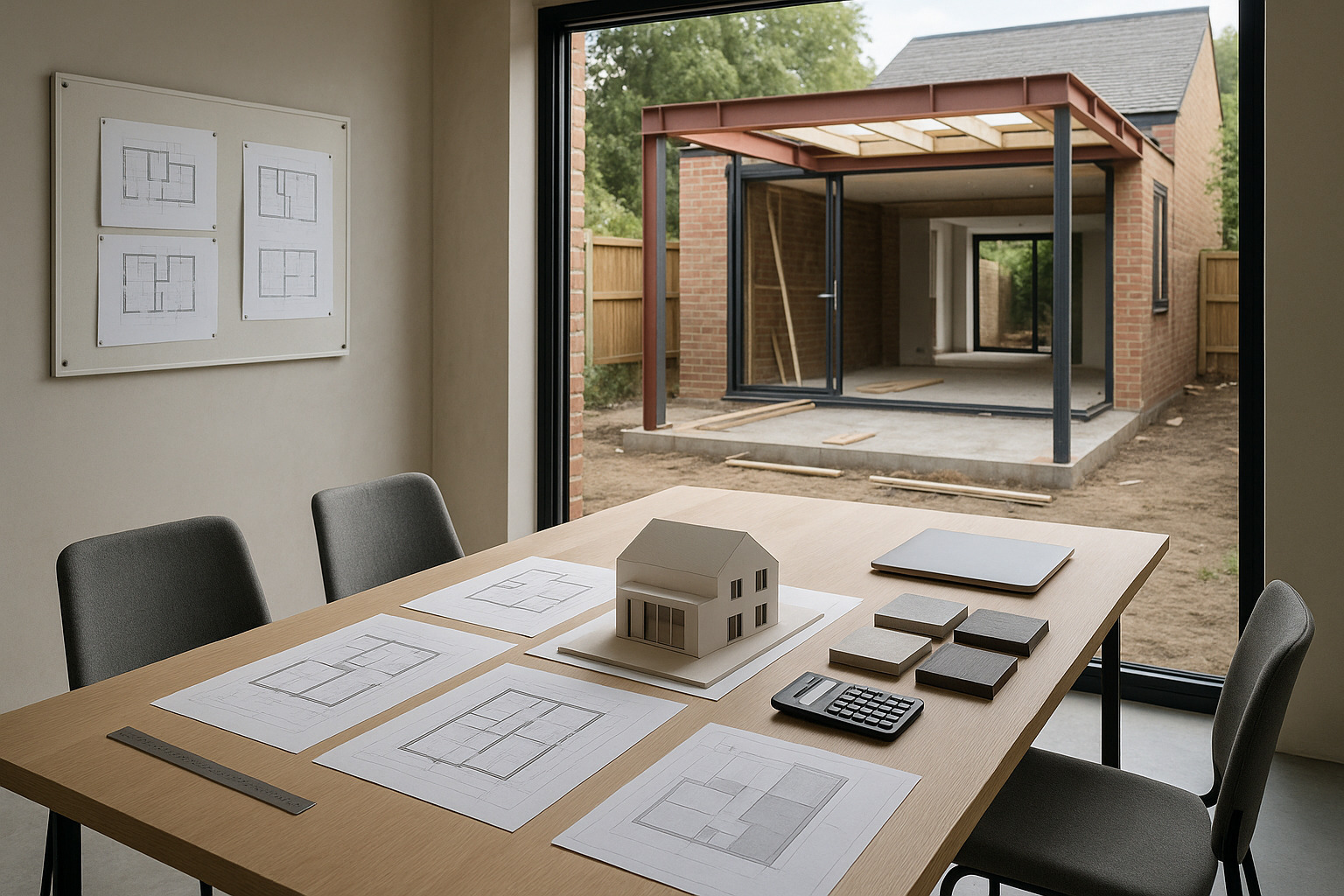
Feasibility First-Align Scope & Budget
Rear home extension design starts with one vital principle: establish your budget as the foundation of every decision. As we guide clients through rear extension projects, feasibility is more than a checklist step-it’s the process that grounds creative design in real, current costs. By prioritizing cost as a design input, not an afterthought, our team aligns your vision with a buildable, risk-managed plan for a rear home extension that enhances your property with clarity from day one.
Our feasibility design phase defines a clear budget before construction begins. We align scope, materials, and priorities with real costs so every decision is grounded in numbers-not guesswork.
We see feasibility as a structured deliverable. In this phase, we explore multiple scope options-perhaps comparing a modest single-story bump-out to a larger open-plan family room or even configurations involving kitchen and utility expansions. For each, we provide range-of-magnitude (ROM) pricing bands based on current construction data. We also introduce early value-engineering opportunities, such as material selections or structural system alternatives. All of this comes together as a preliminary cost baseline, explicitly tied to the selected scope option, so that trade-offs are clear and actionable early on.
Establish the budget in feasibility, then manage it actively through design. This approach puts clients in control and reduces the chance of unpleasant cost surprises. By focusing on scope alignment, material choices, and costed options, we ensure rear home extension design is both practical and inspiring-without risking your financial comfort zone. For clients considering options like bedroom additions, we recommend reviewing https://www.livcompanies.com/additions/bedroom/ for insight into specialized scope planning.
Design with Cost Checkpoints
Once we’ve mapped your priorities in feasibility, we develop the rear extension design with scheduled cost checkpoints at every critical stage. Our process breaks the “guess first, budget later” cycle that causes project risk. As design unfolds-from initial concept through to detailed drawings-we use pricing as a lens to refine decisions, never to retroactively “fix” overages after the fact.
Rear Home Extension Design: Cost Gate Breakdown
We implement clear checkpoints at these defined milestones:
• After Schematic Design: We compare early design ideas-open plan kitchen extensions, sunrooms, or hybrid indoor-outdoor living areas-with updated pricing to check alignment.
• After Design Development: Here, we measure how selected layouts and materials are impacting the cost baseline and document what-if scenarios to support value-conscious choices.
• At approximately 50% Construction Documents: Detailed engineering and systems coordination influence pricing. We review for any “creep” and validate scope restraint.
• At approximately 90% Construction Documents: We lock in nearly final specifications, with costs now within a tightly controlled band. Any remaining value-engineering options or clarifications are documented transparently.
Throughout detailed design, we treat the budget as a live document. Scheduled cost checkpoints at key milestones confirm scope against budget and capture value-engineering trade-offs.
Hypothetical Numeric Tightening Example
Consider a hypothetical rear home extension design: Initially, after feasibility, the ROM pricing stands at €120k–€140k. As we refine the design during Design Development, the range narrows to €132k–€136k, reflecting more specific scope and early selections. By 90% Construction Documents, we reach a final estimate of €134.8k based on fully resolved plans. Pricing is then locked before construction begins. This progression is illustrative-not a guarantee-but it demonstrates the discipline of narrowing cost projections and removing guesswork before anyone breaks ground.
This process-driven method reinforces scope alignment, which is especially critical as you select from the diverse range of rear extension solutions, such as modern glass additions or classic brick expansions. Clients can explore related architectural workflows at https://www.livcompanies.com/architecture-and-design/ to better understand design stage coordination.
Pre-Construction Price Lock
With design documentation finalized, we enter the most critical price-control phase for any rear home extension design. Before we start construction, we finalize drawings and specifications, clarify allowances, and lock the price on paper. This approach reduces owner risk and minimizes the need for contingencies.
At this point-before any construction team mobilizes-the entire scope, all material commitments, and system choices are documented and reviewed for completeness. No scope or price ambiguity remains; our clients can move forward with eyes wide open.
This disciplined approach means fewer surprises, lower owner risk, and a minimized need for broad contingency funds. We lock pricing before we mobilize. For rear extension projects-including those integrated with major kitchen reconfigurations, expanded mudrooms, or new indoor/outdoor transitions-this step directly reduces financial risk and ensures the investment is protected from last-minute design changes.
For regulatory confidence, we proactively address planning permissions and code compliance during design documentation. This ensures your rear extension is reviewed and prepared for local authority approvals, in line with guidance such as offered at RIBA’s home extension planning resources. This further minimizes risk prior to breaking ground. If your vision includes specialty rooms such as functional mudroom spaces, consider best practices at https://www.livcompanies.com/additions/mudrooms/ as you finalize your scope.
Build with Confidence
With bidding, design, approvals, and price lockouts behind us, construction is executed as planned-not as a process of budget “discovery.” Our disciplined execution is all about scope control, documented change management, and precise delivery against the agreed, papered price for your rear home extension design.
During this phase, we implement robust protocols for any required change orders-tied directly to documented specifications. This maintains clarity and keeps margins for unexpected overruns limited. Our process-quality-driven and strictly budget managed-means you’re not navigating surprises, but witnessing a disciplined realization of your design, from foundation work to finished spaces.
This methodology sharply reduces owner risk and keeps reserves tightly focused. We always recommend right-sizing a modest reserve, targeted only to known unknowns-such as concealed site conditions that may arise after demolition or excavation. Because the design and specification are locked pre-construction, the need for broad, undefined contingencies is substantially reduced.
By treating each rear extension not just as a creative opportunity, but as a disciplined, cost-managed process, we deliver living spaces that are both architecturally ambitious and financially grounded. Our work on vertical additions-such as those explored at https://www.livcompanies.com/additions/second-story/ follows the same rigorous execution strategy as our rear extension projects.
Benefits, Materials, and Maximizing Value in Rear Home Extension Design
A well-designed rear home extension offers key advantages: it increases usable square footage, improves home value, and adapts your property to modern living needs. By blending new square footage with existing architecture, these projects often create seamless indoor-outdoor connections, more functional kitchens, playrooms, or home offices. The options for rear-facing extensions are nearly limitless-and each is made practical when cost is placed first in the process.
Material selection can drive both atmosphere and long-term operating costs. Common choices include highly insulated glazing for light-filled garden rooms, engineered wood or steel for open spans, and durable fiber-cement siding for lower maintenance. Material costs, design flexibility, and regulatory compliance are jointly reviewed to ensure the final specification works within the established budget.
Planning permissions and code compliance are risk checkpoints themselves-timely submissions and early authority engagement help keep schedules intact. Practices for maximizing space often involve open floor plans, multi-function zones, extensive window walls for daylight, and exterior thresholds that blend patios or decks with main living spaces. When managed through our feasibility and design checkpoints, these features add value without sacrificing cost control.
Cost considerations remain central throughout. By front-loading budget and following a disciplined progression of scope validation, cost-checkpoint reviews, and final price locking, rear home extension design transforms risk into managed opportunity. Our approach ensures lasting function and clear financial boundaries.
If you’re evaluating rear extension options, schedule a feasibility consult to define your budget before you build.
FAQ
What is rear home extension design?
Rear home extension design refers to expanding your living space at the back of your property. At Liv Companies, we focus on creating seamless transitions between your original home and the new extension. By carefully planning layout and aesthetics, your rear extension will boost both functionality and curb appeal.
What are the main benefits of a rear home extension?
Extending your home at the rear brings several advantages. For example, you can create an open-plan kitchen, add more natural light, or tailor new spaces to your family’s needs. Moreover, well-designed rear extensions can increase your property’s value and enhance day-to-day living.
How do I choose the right style for a rear home extension?
When selecting a style, consider your existing home’s architecture and your family’s lifestyle. For instance, contemporary designs often feature large glass doors for a modern touch, while traditional homes may suit brickwork extensions. At Liv Companies, we help you decide based on your personal tastes and practical needs.
Do I need planning permission for a rear extension?
In many cases, rear extensions fall under permitted development rights, especially if the project size is modest. However, there are exceptions. We always recommend checking local regulations and consulting with our expert team to ensure every step of your rear home extension project is compliant.
How can I maximize space with a rear extension?
To make the most of your rear extension, focus on an open-plan layout and clever storage options. In addition, incorporating features like sliding or folding doors can help blend indoor and outdoor spaces, making your new extension feel even larger and more inviting.