

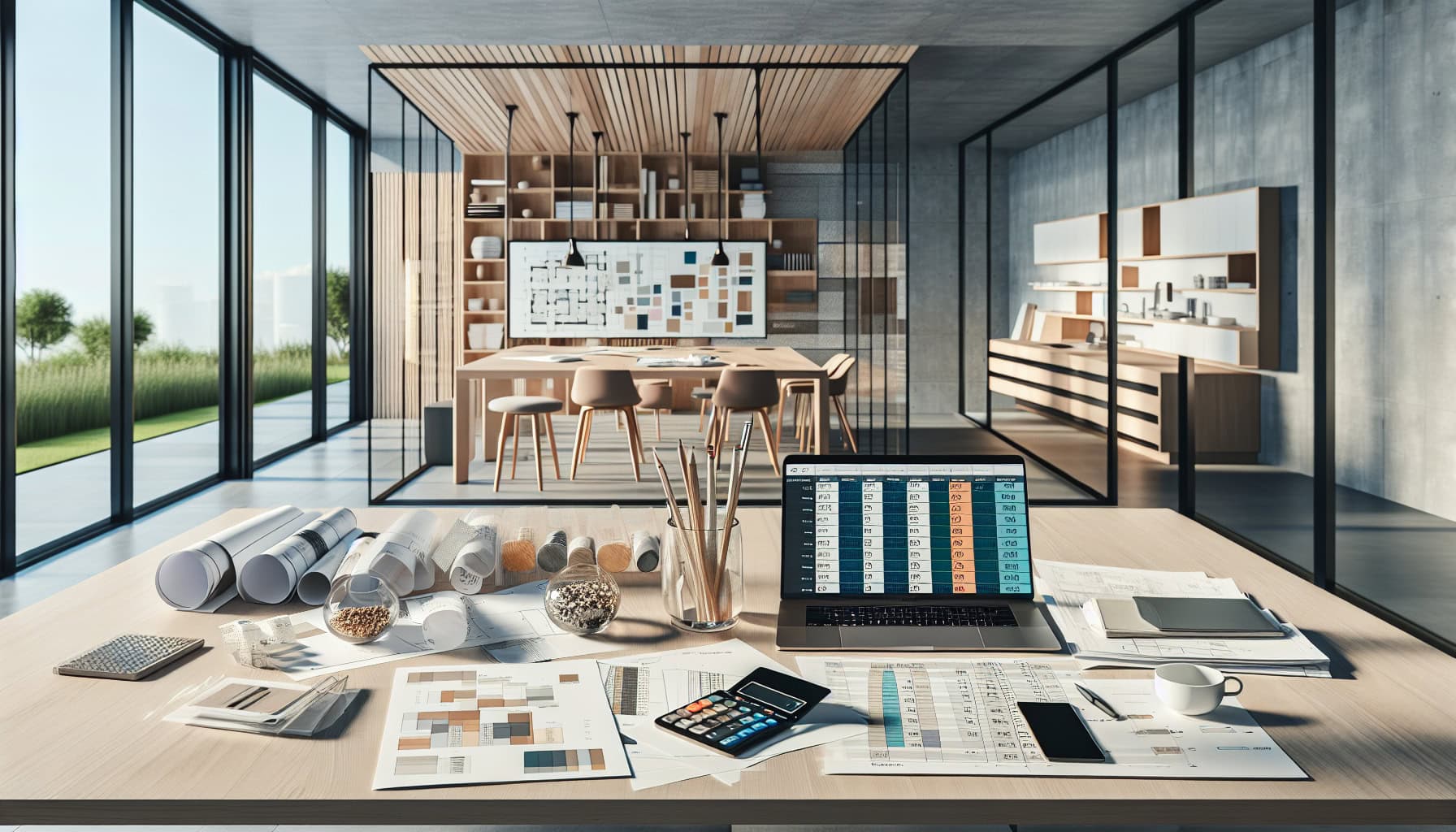
Feasibility First-Align Scope & Budget
Embarking on a construction project requires discipline, not just creativity. The streamlined design build process puts feasibility design and cost definition at the forefront, making cost a design input-not an afterthought. Before any wall is moved or a single finish is selected, we define a budget that’s grounded in clear numbers and scope clarity. This disciplined, process-driven approach establishes the cost baseline and risk management strategy that will drive every future decision.
Our feasibility design phase defines a clear budget before construction begins. We align scope, materials, and priorities with real costs so every decision is grounded in numbers-not guesswork.
During feasibility, we don’t just estimate costs; we analyze scope options, ROM (rough order of magnitude) pricing bands, and early value-engineering choices. This may include comparing alternative floorplans, proposed material grades, or weighing features like energy performance vs. visual detailing. Each scope option is quantified in both technical terms and financial implications to ensure you have agency at every step. Our preliminary cost baseline ties specifically to the defined scope, not broad industry averages or historical benchmarks. Establish the budget in feasibility, then manage it actively through design.
We treat the feasibility deliverables as working tools: scope options modeled in financial context, real-world pricing bands, and a menu of early value-engineering decisions. All are oriented to put actual numbers to ideas-empowering owners to avoid chasing unbuildable concepts. This alignment of ambition and investment at the outset is how we manage risk and avoid surprises later. With scope and cost integration from day one, a streamlined design build process transforms budget from a constraint into a tool for creative, cost-driven decision-making.
For more on how our cost-focused approach begins far before hammers hit drywall, see our Remodeling process.
Design with Cost Checkpoints
With feasibility and a preliminary budget established, design proceeds as a series of clearly defined cost checkpoints. What sets the streamlined design build process apart is continuous cost validation-not leaving budget review until the end, but using checkpoints to contain cost risk and drive smarter choices. Cost is tracked alongside evolving scope from the very first drawing to the near-final construction set.
Throughout detailed design, we treat the budget as a live document. Scheduled cost checkpoints at key milestones confirm scope against budget and capture value-engineering trade-offs.
Key Cost Gates Aligned with Design Milestones
The following explicit cost gates are foundational to transparency and control:
After Schematic Design, we verify that early layout ideas are feasible within the established range. After Design Development, we confirm that systems, finishes, and engineered details fit within a narrowed projection. At approximately 50% Construction Documents, all major decisions have been made, so we tighten the price band. By approximately 90% Construction Documents, we deliver a nearly final cost-minimized swings, maximized certainty, and all value-engineering measures incorporated.
Illustrative Budget Tightening Scenario
Consider a hypothetical scenario aligned with this numeric progression: During feasibility, a project’s range is estimated at €120k–€140k. After design development and product selection, pricing is sharpened to €132k–€136k. As documentation nears completion, the range narrows again. By 90% of construction documents, the project is at €134.8k, ready to be locked before construction begins. This model is illustrative and demonstrates how a disciplined process narrows cost risk with each phase. It does not guarantee outcomes but offers a clear path for budget management-well before any contractor sets foot onsite.
At each checkpoint, we document and communicate value-engineering trade-offs, empowering our clients to make informed choices without surprises. This transparent cost alignment at every stage is the essence of a streamlined design build process.
For more about how our cost checkpoints can support disciplined architectural design, visit our Architecture and Design overview.
Pre-Construction Price Lock
After cost has been managed through feasibility and detailed design, we transition confidently to the pre-construction price lock. The streamlined design build process culminates in finalization of all construction documents, drawings, and schedules, with every design detail papered and specified. Here, the budget is no longer an estimate-it’s a defined, actionable number reflected in the contract before any site mobilization occurs.
All allowances-such as flooring selections, appliance grades, or lighting fixture packages-are clarified and documented. There is no ambiguity about what is “included” and what is not. Options and alternates are codified in writing, ensuring that cost and scope are locked together.
Before we start construction, we finalize drawings and specifications, clarify allowances, and lock the price on paper. This approach reduces owner risk and minimizes the need for contingencies.
We lock pricing before we mobilize. The owner has visibility into exactly what is being delivered and at what cost, bound to the completed documentation. Fewer surprises, lower owner risk, and minimized need for added reserve funds. Our process makes budgeting proactive, not reactive-funds are allocated for targeted reserves, usually for known unknowns like concealed site conditions, but unnecessary “cover the gaps” contingencies are avoided. This discipline is what allows both owners and builders to proceed with confidence.
For questions about how pre-construction price lock supports risk-managed project delivery, you can reach out via our contact form.
Build with Confidence
When construction begins, it is the disciplined execution of what has already been mapped, costed, and agreed upon in writing. The streamlined design build process positions building as plan execution, not budget discovery. Our approach emphasizes tight scope control, documented change management, and adherence to the papered price established in the earlier phases.
Any change requests-whether schedule-driven, aesthetic, or scope-altering-are tracked, documented, and priced based on clear protocols. This transparency supports trust and minimizes project drift. By having construction teams actively involved through design, field decisions align precisely with the project intent and budget, not only reducing confusion but also removing the usual adversarial dynamic of “owner vs. builder” budgeting mid-construction.
This framework reduces owner risk, limits surprises, and minimizes the need for contingencies. The only reserve required is a modest one, targeted to very specific “known unknowns”-most often those that could not be designed out due to true site limitations. Otherwise, construction is simply the execution of the finalized scope, schedule, and cost plan-no surprises introduced after breaking ground.
For those ready to build with clarity and minimized risk, we invite you to experience our client-centered, process-driven approach. Start with our online client questionnaire to see how a disciplined method aligns your goals with cost control.
How a Streamlined Design Build Process Transforms Projects
This structure is transformative. Owners experience fewer change orders, expedited schedules, and cost certainty. Team members collaborate from day one, ensuring constructability issues are resolved before work begins. It reduces friction, promotes clarity, and removes assumptions-which together yield a less stressful journey. For a technical deep-dive into how design-build is reshaping the industry, visit this Autodesk resource.
Collaborating Effectively in Design-Build Teams
Teamwork is inseparable from a streamlined design build process. By assembling the right professionals-architects, interior designers, estimators, and builders-early, we foster alignment between design intent and real-world cost. This collaboration is not just about good communication-it is about joining forces around a single cost-management mission. Each role stays focused on value, feasibility, and risk reduction. Frequent check-ins and shared tools enable us to identify constructability or budget risks well before they materialize on site. This methodical process limits ambiguity and keeps each decision within scope and budget parameters.
Avoiding Common Design and Build Pitfalls
Most design-build failures can be traced to two issues: poor cost integration and unclear scope. With our process, we tackle these risks directly. Cost not tracked at each design milestone leads to overruns; vague deliverables introduce last-minute changes. We avoid these pitfalls by integrating scope and cost management processes all the way from feasibility to project closeout. Every stakeholder knows decision impacts, and no step is left to guesswork. This is why leading owners and project partners alike embrace a streamlined design build process-choosing certainty and risk management over improvisation.
Why Embrace a Streamlined Design Build Approach?
The advantages speak for themselves: better budget control, clearer communication, limited need for contingency funds, and a predictable delivery sequence. Owners who prioritize cost-first planning and integrated risk management consistently see more successful outcomes. The process we use at LivCo is designed for transparency and predictable results, not promise-filled “guesstimates.”
If process-driven, client-centered construction is your priority, consider a feasibility consult-our first step in every project for a reason.
Future Trends in the Design Build Process
Looking forward, we expect the streamlined design build process to further integrate digital design and real-time cost validation. Cloud-based modeling, dynamic pricing tools, and collaborative project management platforms will all enhance the discipline of scope-cost integration. The focus on early feasibility and cost-informed design decision-making will only grow as owners demand less risk and more transparency in both residential and commercial environments.
Maximizing Efficiency with Streamlined Methods
Efficiency comes from disciplined process, not shortcuts. By integrating feasibility, design checkpoints, value-driven documentation, and a papered pre-construction price, owners can unlock not just cost savings but also clarity and peace of mind. The streamlined design build process is about eliminating unnecessary contingency and rework, accelerating delivery, and keeping everyone accountable to both numbers and agreed-upon intent.
Schedule a feasibility consult to define your budget before you build.
FAQ
What is a streamlined design build process?
A streamlined design build process integrates both design and construction phases into one cohesive workflow. By managing projects from inception to completion under a single team, we eliminate delays and unnecessary costs. The result is a seamless experience for our clients and faster project delivery.
What are the main benefits of using a streamlined design build process?
Our streamlined approach offers several key benefits. For example, it reduces misunderstandings, speeds up timelines, and improves communication between everyone involved. In addition, we help clients make more informed decisions early, ensuring budget and design goals stay on track throughout the project.
How does this approach transform construction projects?
Implementing this method transforms projects by fostering a collaborative environment where design and build teams work together from day one. Moreover, this collaboration enhances accountability, which often results in higher-quality outcomes and greater client satisfaction.
What steps are involved in a streamlined design build process?
We typically begin with a project assessment, followed by design development, budgeting, and permitting. After these initial steps, we move into construction, while maintaining transparent communication at every phase. This approach maximizes efficiency and minimizes surprises.
Why should we embrace a streamlined design build approach now?
With construction demands evolving, adopting a streamlined design build process positions clients for success. Furthermore, it keeps projects agile, adapts easily to new technologies, and is well-suited for the future trends shaping the industry in 2026 and beyond.