

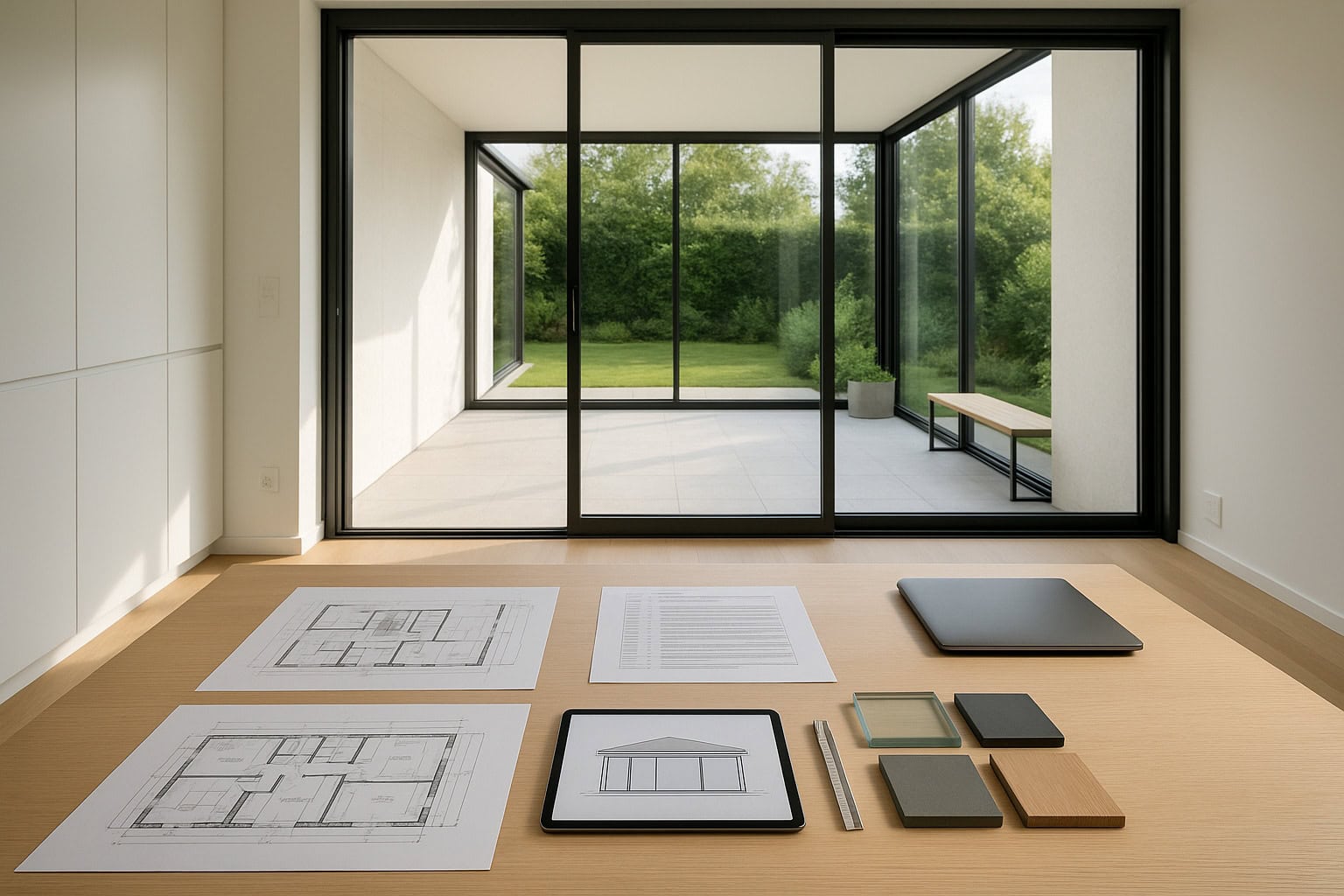
Feasibility First-Align Scope & Budget
Sunroom home addition design delivers light-filled living spaces that connect our homes with the outdoors. For most of us, excitement starts with inspiration-imagining a glassed-in retreat that welcomes sunlight in every season. However, at LivCo, experience has taught us that the foundation of any successful sunroom project is grounded, before all else, in feasibility design. This means defining a realistic, documented budget up front-prior to design, let alone construction. Cost isn’t a back-end adjustment; it’s a design input from day one.
Our feasibility design phase defines a clear budget before construction begins. We align scope, materials, and priorities with real costs so every decision is grounded in numbers-not guesswork.
Establishing feasibility unlocks not just inspiration, but predictability. We begin by outlining scope options tailored to your vision and existing structure: full glass sunrooms, hybrid spaces that can be conditioned year-round, or three-season enclosures. For each, we present ROM (Rough Order of Magnitude) pricing bands-grounded in current material and labor costs, local code requirements, and the complexity of tying the sunroom into your home’s structure and envelope. You’ll see line-of-sight comparisons that clarify trade-offs: more glazing raises both light levels and costs; specialty roofing affects long-term durability and budget. Early value-engineering conversations-such as optimizing foundation systems or calibrating fenestration package selections-are documented right away.
At feasibility, we set a preliminary cost baseline, mapping scope to price brackets. Establish the budget in feasibility, then manage it actively through design. We’ve found this disciplined approach supports sound decisions and avoids downstream surprises. Cost is a design input, not an afterthought, and that principle guides every sunroom home addition design project we deliver.
Design with Cost Checkpoints
With the feasibility baseline in place, we move into detailed design-always treating cost as a core design variable. For sunroom home addition design projects, the range of choices expands: framing systems, glass performance specs, heating and cooling options, and finishes all shape the budget. Our approach relies on scheduled cost checkpoints at critical milestones to confirm that our evolving design remains aligned to your documented budget. Adjustments can be made when they’re easiest and least costly-on paper, not on site.
Throughout detailed design, we treat the budget as a live document. Scheduled cost checkpoints at key milestones confirm scope against budget and capture value-engineering trade-offs.
Explicit Cost Gates
Key cost gates provide clarity and accountability. We provide a comprehensive cost review after Schematic Design-when massing, window arrangements, and program basics are locked. A second review follows Design Development, where structure, fenestration systems, and major materials are clarified. Once we reach approximately 50% Construction Documents, a third estimate reflects specifications and systems with greater resolution. Approaching 90% Construction Documents, allowances and unit prices are further refined.
Each checkpoint acts as a control point-confirming agreed scope and documenting any value pickups or trade-offs. For example, if a feature such as operable skylights or radiant floors does not align with your priorities or budget at the Design Development stage, we can rapidly evaluate lower-cost alternatives or document a clear decision on scope changes.
Numeric Tightening Example
Consider a hypothetical sunroom home addition design project as follows: At feasibility, we estimate a ROM cost range of €120k–€140k, depending on glazing, foundation, and HVAC. At Design Development, as details solidify, the working range tightens to €132k–€136k. By the time we reach 90% Construction Documents, the remaining variables are resolved, and the price is set at €134.8k-fully locked prior to construction. This illustration shows how cost uncertainty can be methodically narrowed by integrating budget reviews into each stage.
Design Ideas and Influences
Every sunroom home addition design we undertake is conceived within budget boundaries defined in feasibility and tested at each checkpoint. Our design team draws on techniques for maximizing light-such as floor-to-ceiling glazing, borrowed clerestory windows, and carefully chosen rooflines. Sustainable options, like high-performance glass and energy-efficient HVAC, are evaluated for both initial cost and long-term operating value. For a broader range of sunroom inspirations, we sometimes consult external idea collections such as this Architectural Digest sunroom gallery, always tailoring concepts to fit project parameters.
Material Selection and Value-Engineering
Material choices drive both the character and cost of sunroom additions. We analyze the durability, light transmittance, and maintenance profiles of aluminum vs. wood vs. composite framing, as well as the ROI of different glass coatings and roof systems. Structural ties to the existing home are closely coordinated. At every stage, we consider value-engineering strategies-such as simplifying rooflines or specifying prefabricated components-if needed to achieve scope alignment.
Pre-Construction Price Lock
As we prepare for construction, everything shifts from design-intent to execution detail. In the pre-construction phase, all drawings, schedules, and specifications are fully completed. Allowances-such as for specialty windows, electrical, or flooring-are clarified and documented. Owner selections not finalized by this point are bounded by agreed budget ranges, minimizing exposure to overruns. We provide a comprehensive cost reconciliation against the latest design documentation.
Before we start construction, we finalize drawings and specifications, clarify allowances, and lock the price on paper. This approach reduces owner risk and minimizes the need for contingencies.
We lock pricing before we mobilize. Fewer surprises, lower owner risk. The contract price is papered and supported by an extensive set of drawings. All parties understand scope, exclusions, and the process for managing documented changes. No pricing “to be determined in the field.”
Related Costs and Allowances
Cost certainty includes clarity around included allowances-such as electrical fixture packages, flooring, or specialty glass. We itemize these and offer options for owner-selected upgrades with fixed associated costs. The contract stipulates the procedure for addressing any changes, which are handled as discrete, documented events. This stepwise approach limits the need for contingencies and provides confidence for all stakeholders.
For more information on how sunroom home addition design fits into a robust architecture and design process, explore our approach at LivCo Architecture & Design.
Build with Confidence
With scope, cost, and documentation fully aligned, construction begins-guided by a process designed to limit risk and surprises. Our disciplined management relies on scope control, documented change management, and execution against the price established in pre-construction. The project team works to the details on paper, not assumptions in the field.
The construction phase is not where budgeting happens, but where plans are executed. If unknowns arise-such as concealed site conditions-we manage them swiftly through established protocols, using a right-sized modest reserve targeted to known unknowns. All other risks are minimized because the design, scope, and cost were reconciled up front. Progress is tracked against the finalized plans, and change orders-if truly necessary-are rare and always fully documented.
This approach reduces owner risk, limits surprises, and minimizes the need for contingencies. The result? Construction is steady and predictable. Homeowners can visualize the finished sunroom from day one, knowing that the price is supported by documentation, not estimates.
Maintaining Your Sunroom Addition
After completion, maintaining a custom sunroom is straightforward. We recommend regular cleaning of glass and framing, periodic inspection of seals, and timely servicing of HVAC and drainage systems. Thoughtful maintenance protects your investment, maintains aesthetic appeal, and ensures durability. Our team provides post-construction guidance so that caring for your light-filled space is seamless year-round.
If you’re considering other types of additions alongside your sunroom-such as bedroom suites or second-story spaces-see our proven process for bedroom additions or second-story additions.
Complementary Sunroom Styles
Not every sunroom addition is the same. Our sunroom home addition design process considers architectural style and context. Whether your home leans contemporary, classic, or transitional, we propose envelope details, fenestration scaling, and finishes that will enhance-not overshadow-your existing architecture. Design intent is always documented and value-engineered to fit the budget established in feasibility.
Process-Oriented Next Steps
Every successful addition hinges on objective planning, clear documentation, and active cost management. As you consider new living space options, we invite you to schedule a feasibility consult to define your budget before you build. Our approach targets clarity, not guesswork-and positions your sunroom home addition design for success.
FAQ
What is sunroom home addition design?
Sunroom home addition design involves creating a space that seamlessly integrates indoor comfort with natural light and outdoor views. At Liv Companies, we focus on functional layouts, energy-efficient materials, and style elements that enhance your existing home. As a result, you get a bright, relaxing room perfect for year-round enjoyment.
What are the main benefits of adding a sunroom to my home?
There are several key advantages. For instance, a sunroom increases your living space, boosts natural light, and provides a versatile area for relaxation or entertaining guests. In addition, a well-designed sunroom can increase your home’s value and improve your daily well-being.
Which materials should I consider for my sunroom addition?
At Liv Companies, we recommend durable materials such as energy-efficient windows, vinyl or aluminum frames, and moisture-resistant flooring. Choosing high-quality materials ensures your sunroom remains comfortable and low-maintenance. Moreover, we help you select finishes that complement your home’s design aesthetic.
How can I maximize natural light in my sunroom?
To maximize sunlight, we suggest using floor-to-ceiling windows, skylights, and minimal window treatments. Additionally, choosing reflective surfaces and light colors enhances brightness. Let our team guide you in positioning your sunroom for optimal exposure and stunning outdoor views.
How do I choose a sunroom style that complements my home?
We help you choose from classic conservatories, contemporary enclosures, or rustic retreats. For example, matching architectural details and materials with your existing home ensures a cohesive appearance. We evaluate your space and preferences to select the perfect sunroom style for your needs.