

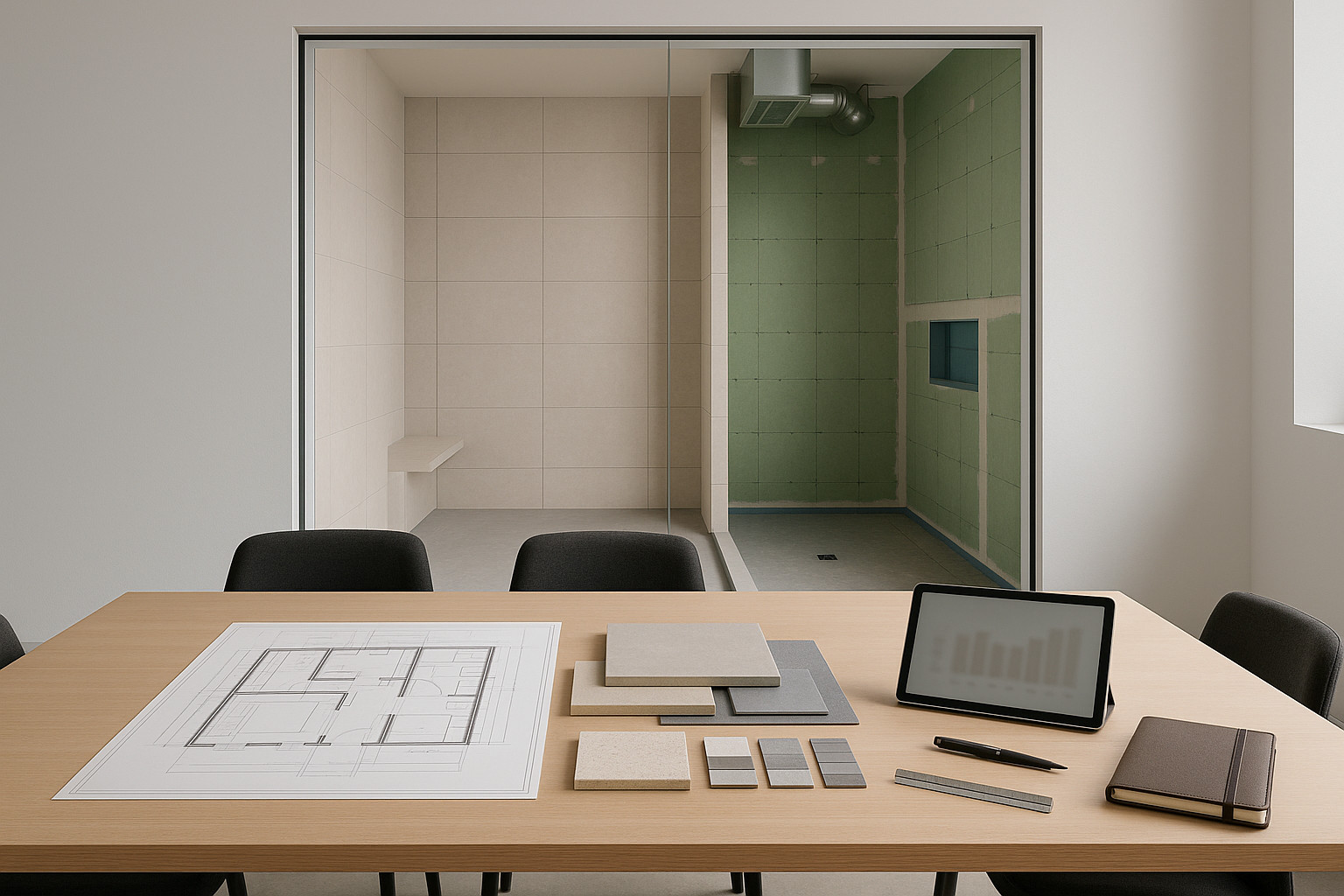
Feasibility First-Align Scope & Budget
When considering a bathroom moisture control remodel, it’s essential that cost is established first-not as a later concern, but as a primary input to the process. For homeowners, the risks of moisture-such as hidden mold, rot, and structural damage-mean that ignoring proper control is both costly and risky. Addressing these concerns through a disciplined process is the best way to protect your investment and home value.
Our feasibility design phase defines a clear budget before construction begins. We align scope, materials, and priorities with real costs so every decision is grounded in numbers-not guesswork.
Establishing the budget in feasibility, then managing it actively through design, is how we control risk and ensure every dollar works purposefully. Cost is a design input, not an afterthought. During feasibility, we explore scope options-whether full replacement or targeted upgrades-to control the investment level. We present ROM (Rough Order of Magnitude) pricing bands, giving you a clear picture of potential costs before deep design work begins. Early value engineering at this stage might include comparing high-performance waterproof membranes to less expensive options or weighing upgrade ventilation against base specifications.
We also set a preliminary cost baseline tied tightly to your preferred scope. This approach clarifies “what if” scenarios: How does selecting quartz over tile impact total cost? Should we design for a walk-in shower if that means less available budget for high-end finishes? With this method, you can balance priorities within a framework of known, transparent costs.
Why a Bathroom Moisture Control Remodel is Essential
Investing in a bathroom moisture control remodel keeps your home safe from water-related damage. Bathrooms naturally harbor high humidity and moisture, creating prime conditions for mold and mildew. Over time, this can silently deteriorate finishes, substructures, and even create air-quality risks. By addressing these factors early, we prevent recurring repair cycles, maximize property value, and reduce total cost of ownership.
Scope Options in Feasibility
Typical options range from comprehensive gut-renovations to selective upgrades-such as adding a high-capacity ventilation fan or upgrading seals and membranes behind tile. We review which materials most effectively resist water, and clarify if layout changes might affect moisture risks or control points.
ROM Pricing & Early Value Engineering
We look at realistic pricing bands for each meaningful scenario: Do you want to upgrade to full-floor waterproofing for peace of mind even if the initial outlay is higher? Would you prefer investing in full-length shower glass over a curtain to better contain water? Our cost modeling lets you compare “good, better, best” solutions without surprises down the line.
Design with Cost Checkpoints
Once scope and a preliminary budget are defined, our process advances to a detailed design phase, where cost management is fully integrated. Bathroom moisture control remodels pose unique design questions: Which finishes minimize water absorption? What layouts facilitate airflow? Every detailed choice is weighed not just for performance, but also for budget implications at every milestone.
Throughout detailed design, we treat the budget as a live document. Scheduled cost checkpoints at key milestones confirm scope against budget and capture value-engineering trade-offs.
Cost checkpoints are hardwired into our process:
After Schematic Design, we map out spatial and systems planning-do tile layouts or shower placements maximize coverage and control seepage? After Design Development, we confirm products and systems align with your investment priorities. At approximately 50% Construction Documents, material specifics (paint, grout, waterproofing, exhaust fan) surface for cost-tightening. At around 90% Construction Documents, we “paper” scope and pricing, locking in clear product and labor assumptions ahead of breaking ground.
Hypothetical Numeric Tightening Example
To illustrate, a typical budget might begin as a broad range: Feasibility: €120k–€140k. After schematic design and initial selections: Design Development: €132k–€136k. At 90% Construction Documents, all details are specified and costs are finalized: €134.8k. Price lock is achieved pre-construction, before any site work or demolition begins. This progression is hypothetical and for illustrative purposes only, showing how committed design reduces uncertainty for your moisture control remodel.
Signs You Need a Bathroom Renovation
Key indicators include persistent dampness, peeling paint, mildew odor, grout discoloration, and wood warping. If you notice water stains on ceilings below a bathroom, or continual fogging even with fans on, these are red flags. Addressing these proactively in a bathroom moisture control remodel, with tight budget controls, is smarter-and often less expensive-than deferring repairs until damage becomes widespread.
Early Design Decisions-Materials for Moisture Prevention
Careful selection of tile, grout, backerboard, and fixtures matters. Porcelain tile resists absorption; epoxy grout discourages staining and water intrusion; glass or stone may require added sealing. We help clarify trade-offs-sometimes a slightly higher upfront cost for the right membrane system saves thousands in long-term repairs.
For further information on bathroom remodeling best practices and options, explore our bathroom remodeling insights.
Pre-Construction Price Lock
As your bathroom moisture control remodel reaches its final planning stage, we ensure all products, finishes, and installation methods are documented in detail-no loose ends remain. This clarity enables us to confirm every variable and lock in the price ahead of site work.
Before we start construction, we finalize drawings and specifications, clarify allowances, and lock the price on paper. This approach reduces owner risk and minimizes the need for contingencies.
We lock pricing before we mobilize. With this approach, there are fewer surprises and lower owner risk. For moisture control specifically, scope is fully defined: Are all wall assemblies using waterproof board or only in high-splash zones? Is electrical upgraded to support new fan capacity? These specifics are baked into both scope and contract-removing gray areas that typically cause cost overruns during traditional remodels.
Even for items subject to market swings-like specialty fans, membranes, or tiles-the allowances are documented and capped whenever practical. We clarify how reserves are set and targeted only for narrow “known unknowns,” like a hidden pipe discovered after tear-out. Never do we treat budgeting as a construction-phase task; planning for cost ends only when final documents are signed.
Ventilation Tips During a Bathroom Moisture Control Remodel
Proper ventilation is essential for moisture management. Installing a high-efficiency exhaust fan, properly sized to the room, supports rapid humidity removal and reduces mildew risk. Fan placement-ideally near showers-matters as much as capacity. Ducting to the exterior (not just the attic) avoids trapping vapor above ceilings, a frequent cause of hidden mold.
Smart controls such as humidity-sensing switches may be more expensive up front but can help keep energy costs in check by running only when needed. We specify fans and systems that balance initial and long-term operational expenses, ensuring your investment maximizes comfort and moisture resistance.
Build with Confidence
Construction is the disciplined execution of the bathroom moisture control remodel plan-not a period for discovering scope or resetting costs. We manage construction according to the finalized documents, with tight scope control and rigorous change management. If site conditions reveal something truly unexpected, our structured process ensures only documented, owner-approved changes are implemented.
This execution-first philosophy means you aren’t vulnerable to budget “drift.” Any reserves are right-sized for the specific risks remaining-such as previously concealed water damage behind walls. We manage for the known unknowns, not blanket contingencies. Careful documentation-of membranes, tile layouts, vapor barriers, and venting-ensures each installation follows requirements for best-in-class moisture control.
We believe in building what’s on paper-not relying on field improvisation. This safeguards results, cost, and timeline.
Common Causes of Moisture Problems in Bathrooms
Poor ventilation, substandard waterproofing, and installation shortcuts (like omitting membrane behind tile) are frequent drivers of bathroom moisture failures. Plumbing leaks, inadequate caulking, or lack of proper slope toward drains also increase risk. By rigorously following detailed plans from the start, our process reduces the likelihood of these issues surfacing.
Long-Term Benefits of a Bathroom Moisture Control Remodel
Investing in proven moisture control methods extends the lifespan of your finishes, improves air quality, and enhances market appeal. Mold and mildew are flagged in most pre-sale home inspections. By addressing risk factors now, you limit future expenses and protect resale value.
For more on how integrated design and construction reduce remodeling risks, see our remodeling process.
Cost vs. Savings: Bathroom Moisture Control Remodel Insights
Upfront investment in waterproof materials, robust membranes, and top-tier ventilation may raise initial cost, but this is balanced by fewer repairs, lower insurance risk, and reduced need for repainting or retiling due to mold. By defining cost first and only building against finalized specifications, we help you avoid “scope creep”-unplanned changes that can inflate total project price significantly.
In addition, robust construction lends itself to more efficient maintenance, less frequent professional cleaning, and lower chance of musty odors or visible mold. Effective moisture control remodels typically pay back in lower repairs, reduced service calls, and improved quality of life.
For more technical information on mold risks and their control, see the EPA’s guidance on bathroom moisture and mold prevention.
How to Maintain Your Bathroom Moisture Control Remodel
After project completion, maintaining a moisture-controlled bathroom requires routine ventilation. Run the fan for at least 20–30 minutes after showering, check and re-caulk joints annually, and inspect grout for breaches. Clean exhaust fan intakes bi-annually to keep airflow high. Periodically check for any sign of surface condensation or musty odor and address these issues early. Well-chosen materials-especially for grout, flooring, and shower liners-reduce maintenance needs, but vigilance is critical for long-term value.
Effective maintenance will prolong the life of your investment and reduce major repair risks. For advice on post-construction upkeep or if you suspect any issues, contact us directly.
Schedule a feasibility consult to define your budget before you build.
FAQ
Why is a bathroom moisture control remodel so important?
Excess moisture can damage walls, cause mold growth, and even impact air quality in your home. At Liv Companies, we believe a well-executed bathroom moisture control remodel not only protects your space but also contributes to a healthier environment for your family. In addition, it increases your home’s long-term value.
What are the most common causes of moisture problems in bathrooms?
Moisture issues often result from poor ventilation, leaking pipes, and inadequate waterproofing. For example, a steamy shower without proper airflow can quickly create excess humidity. By tackling these areas, we help you prevent persistent moisture problems during your remodel.
How can I recognize when my bathroom needs a moisture control renovation?
Look out for signs like peeling paint, musty odors, or visible mold. Discolored grout and warped wood are other warning signals. If you notice these, it’s a good time to contact our team for an evaluation and expert advice on solutions.
What materials work best for preventing moisture issues during a bathroom remodel?
We recommend using moisture-resistant drywall, non-porous tiles, and mold-resistant paint. For added durability, vinyl flooring and properly sealed fixtures are excellent choices. Choosing the right materials is a crucial step toward lasting moisture protection.
How can I maintain my bathroom after a moisture control remodel?
To keep your bathroom in top shape, regularly clean exhaust fans, inspect caulking for gaps, and promptly fix minor leaks. Additionally, good habits like running the fan during showers make a big difference in long-term moisture management.