

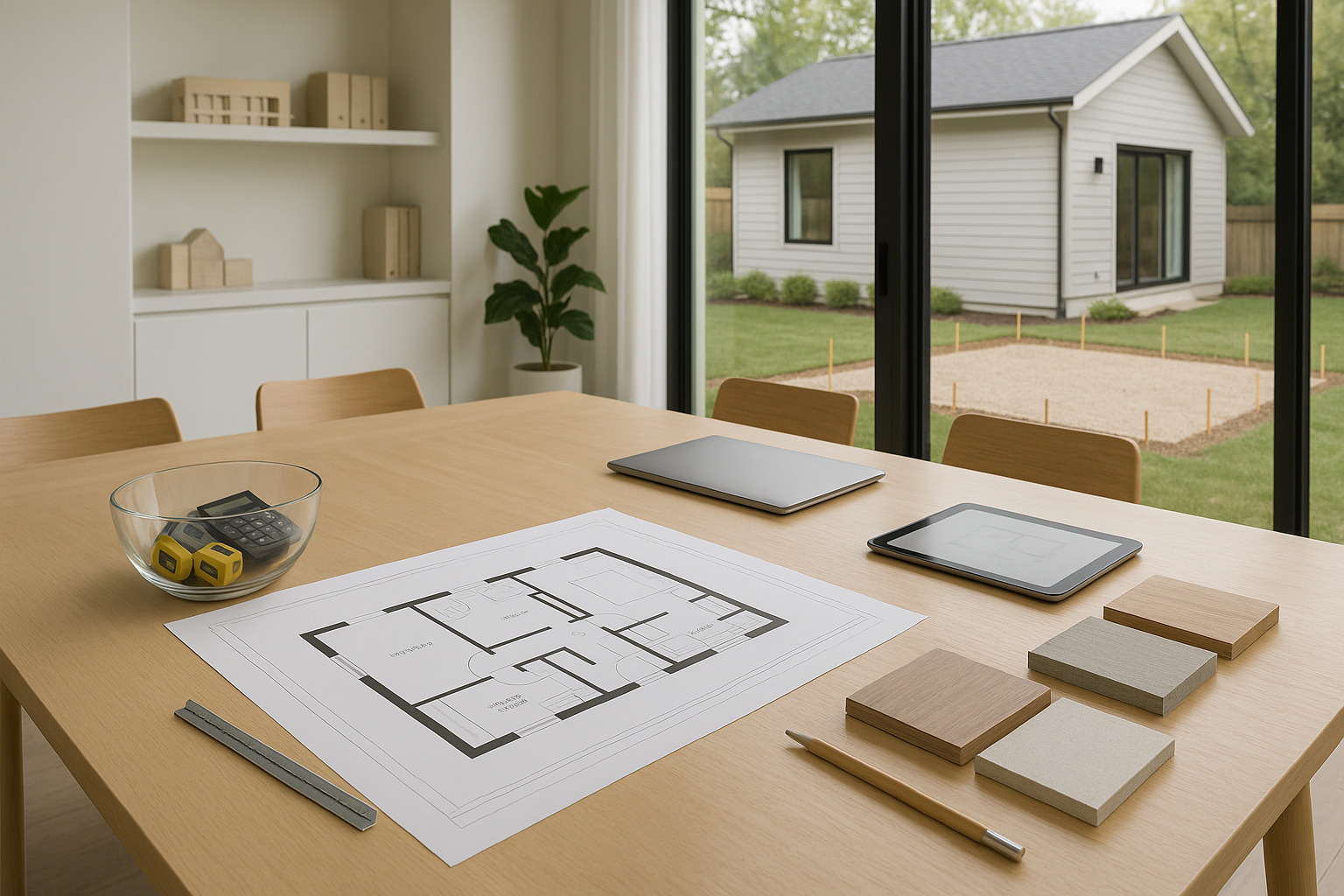
Feasibility First-Align Scope & Budget
Does your home feel tight when guests or extended family visit? You may be thinking about a guest suite home addition but uncertain about costs and practicality. At LivCo, we believe every decision should be grounded in cost realism from day one. Before sketches, before selections, before you fall in love with features-we define possible scope and a realistic budget that drives your project, not the other way around.
Our feasibility design phase defines a clear budget before construction begins. We align scope, materials, and priorities with real costs so every decision is grounded in numbers-not guesswork.
Establish the budget in feasibility, then manage it actively through design. For a guest suite home addition, this means understanding what you want-private bath, kitchenette, separate entry, universal design, or flexible family use-and exploring scope options aligned with early cost estimates. We outline ROM (Rough Order of Magnitude) pricing bands for each path, so you know if you’re working in the $80k, $120k, or $160k range depending on configuration and finishes. Early value engineering, like simplifying plumbing runs or adjusting layout dimensions, can unlock meaningful savings or added amenities for the same cost.
Our feasibility deliverable sets a preliminary cost baseline tied to the specific scope discussed. You’ll see clear options, associated cost ranges, and documentation of early choices-so your investment is measured and strategic. This disciplined process provides clarity and reduces risk. Whether the guest suite home addition is for frequent relatives or for future multigenerational needs, every step starts with transparent numbers.
As you consider upgrading with a guest suite, remember: cost is a design input, not an afterthought. This approach contrasts sharply with the pitfalls of hoping for low costs until late in the process, only to be caught off guard during construction.
Explore more about scope setting and budget clarity in residential design through our architecture and design services.
Design with Cost Checkpoints
Once we agree on scope and baseline investment, our process moves into design-but keeps budget control at its center. Adding a guest suite home addition should not be an open-ended journey; instead, each design stage includes a structured “cost gate” to confirm and refine the numbers. Cost checkpoints occur at:
• After Schematic Design
At this early stage, we confirm that layout concepts and basic floorplan ambitions still align with your agreed scope and budget range.
• After Design Development
Here, expanded plans and elevations bring detail and function. We revisit budget, incorporate owner selections, and clarify trade-offs.
• At Approximately 50% Construction Documents
Halfway through construction drawings, we update cost models with tighter details on finishes, fixtures, and product specs.
• At Approximately 90% Construction Documents
In the final phase before bidding or pricing lock, we capture all late-stage refinements. This checkpoint ensures even “last tweaks” are priced in, not discovered later.
Throughout detailed design, we treat the budget as a live document. Scheduled cost checkpoints at key milestones confirm scope against budget and capture value-engineering trade-offs.
Here’s a hypothetical example for a guest suite home addition: Initial feasibility may show a ROM of €120k–€140k. After design development, finishes and systems are refined, narrowing the budget to €132k–€136k. By 90% construction documents, all final choices are set, yielding a pricing lock at €134.8k-before any construction begins. This scenario is for illustration, not a guarantee, but it demonstrates how our process narrows uncertainty and aligns numbers with expectations.
We use every checkpoint to preserve your priorities and document value-driven decisions. Tweaks, swaps, omissions, or enhancements-every change is captured in real-time, not left to chance. That’s how we help you maximize value and limit surprises for your guest suite home addition.
If you want to see how disciplined cost control and design checkpoints improve remodels, visit our remodeling process insights.
Pre-Construction Price Lock
With design and specifications finalized, we enter the pre-construction phase of your guest suite home addition. This stage is about price certainty-not budgeting in the field. We gather trade partner input, clarify every owner-selected item, and set allowances for any remaining selections. Then, we establish a papered, locked price before a single tool is mobilized.
Before we start construction, we finalize drawings and specifications, clarify allowances, and lock the price on paper. This approach reduces owner risk and minimizes the need for contingencies.
Price lock is an explicit milestone. By now, your guest suite addition’s scope, materials, and schedule are confirmed-and so is your financial commitment. We lock pricing before we mobilize. Fewer surprises, lower owner risk. The result? You know your upfront investment, and any modifications follow a documented change order process that protects you from open-ended overruns.
This disciplined transition from design to build phase means your reserves can be modest, targeted only to known unknowns-like concealed conditions in walls or under slab-not for broad uncertainties. It’s a transparent, risk-managed strategy that respects your investment goals.
Learn more about how we lock pricing and manage project scope across all types of large-scale additions at LivCo Second Story Additions.
Build with Confidence
Once construction begins, we don’t “discover” the budget-we simply execute the guest suite home addition according to fully developed, papered documentation. Scope control is foundational. Every feature built on-site is documented; every change is tracked and priced by an agreed method, not verbal promises. This proactive stance safeguards your project from creeping cost or ambiguous upgrades.
Our construction team operates from a position of preparation. Detailed plans, locked pricing, and lean reserves built for real-world unknowns deliver a controlled, predictable experience. We prioritize communication, transparency, and proactive change management. If a concealed site condition does require attention, you have a documented process and a right-sized reserve. No costly surprises, and no need to default to large, uncertain contingencies.
This approach reduces owner risk, limits financial surprises, and delivers on your investment strategy. Your guest suite home addition moves from plan to reality with discipline-making the process less stressful and more reliable for you and your family.
For deeper insight into risk-managed additions and bedroom suite options, review our bedroom addition options and gallery.
Schedule a feasibility consult to define your budget before you build.
Why Consider a Guest Suite Home Addition?
Today, many homeowners see increasing value in a private, flexible guest suite. Whether for frequent visitors, aging parents, or work-from-home space that can pivot for guests, a guest suite home addition unlocks comfort and privacy without moving. By investing in a disciplined, cost-aligned process, you make decisions confidently and avoid common financial shocks that come with poorly defined projects.
Benefits of Adding Extra Space for Visitors
Beyond hospitality, a guest suite provides flexibility for remote work, home healthcare, or future rental. According to recent data covered by HUD, well-planned additions can increase home utility and market appeal-especially as multigenerational living rises. The key is pairing these benefits with an approach that manages cost exposure from concept through buildout.
Planning Your Perfect Guest Space
The planning process shapes how well a guest suite home addition fits your needs and adds value. Do you need independent access for in-laws? A spa-style bath or a simple, functional layout? We help you clarify room details, adjacencies, and upgrade opportunities-balancing wants with a pre-defined cost baseline. Our role is to translate lifestyle goals into actionable scope options, priced upfront and revisited at every design checkpoint.
Design Ideas for a Guest Suite Home Addition
Guest suites can be configured as over-garage apartments, first-floor additions, or basement retreats. Features like private entries, mini-kitchens, and universal accessibility widen appeal and potential future use cases. These upgrades can be efficiently evaluated during design development and value-engineered to fit your risk tolerance and budget goals. Our disciplined process explores functional, stylish options-always with numbers top of mind.
Cost Factors of Adding a Guest Suite
Major cost drivers include foundation design, HVAC system split/extension, plumbing routes, separate utility connections, and finish grade selections. Our structured feasibility and design checkpoints ensure that each component is priced early and adjusted as you refine your vision. Allowances for fixtures, flooring, and specialty lighting are all itemized and tracked, reducing surprises later.
Choosing the Right Location for a Guest Suite
Whether integrating within the main floor, attaching to the back of the home, or finishing above the garage, site logistics play a major role in cost and functionality. Early feasibility analysis explores each option’s impact on site access, code compliance, and overall construction complexity. This up-front clarity influences both your investment level and project timeline.
Maximizing Value with a Guest Suite Home Addition
A disciplined process maximizes value. Defining scope, documenting trade-offs at every checkpoint, and locking price pre-construction means you invest where it matters most-without open-ended upgrades or budget risk. For those considering future aging-in-place, income suites, or resale, these steps protect both near- and long-term value.
Final Tips for Successful Guest Suite Projects
Align your guest suite home addition goals with a transparent process. Treat cost as a design input, establish clear scope, revisit numbers at key phases, and only build after the price is locked on paper. Keep reserves modest and targeted-never open ended. Choose a partner who prioritizes clarity, documentation, and proactive communication at every stage.
Enjoy the Comfort of Your New Guest Suite
A guest suite designed and built with scope- and cost-alignment delivers comfort for your guests, flexibility for your lifestyle, and confidence for your budget. At LivCo, we focus on reducing risk and delivering value at every stage, so you can enjoy your new space knowing every decision was anchored in numbers and transparency.
Schedule a feasibility consult to define your budget before you build.
FAQ
Why should I consider a guest suite home addition?
Adding a guest suite brings flexibility and convenience to your living space. For example, it creates a comfortable area for friends and family during visits and can even serve as a private retreat for multigenerational living. Moreover, increasing your home’s usable space can boost property value and market appeal.
What are the main benefits of having extra space for visitors?
Having extra space means guests can enjoy privacy without disrupting daily routines. In addition, a dedicated suite creates a welcoming atmosphere. Not only does this improve the guest experience, but it also allows homeowners to use the space for hobbies, work, or future rental income.
How do we begin planning the perfect guest space?
We recommend starting with your guests’ needs in mind, considering essential features such as a private bathroom, ample storage, and accessible entryways. Furthermore, collaborating with our design team ensures the layout will blend seamlessly with your existing home.
What design ideas can enhance a guest suite?
There are countless design inspirations for a guest suite home addition. For instance, you can incorporate natural lighting, multifunctional furniture, and calming color schemes. Additionally, consider adding a small kitchenette for extra convenience, making the suite feel independent yet integrated with your home.
Which factors affect the cost of building a guest suite?
Several elements impact the overall investment, including the suite’s size, location within the property, and the features included. Choosing premium materials or adding amenities such as in-floor heating can further influence cost. We work closely with our clients to develop a project plan that fits their vision and budget.