

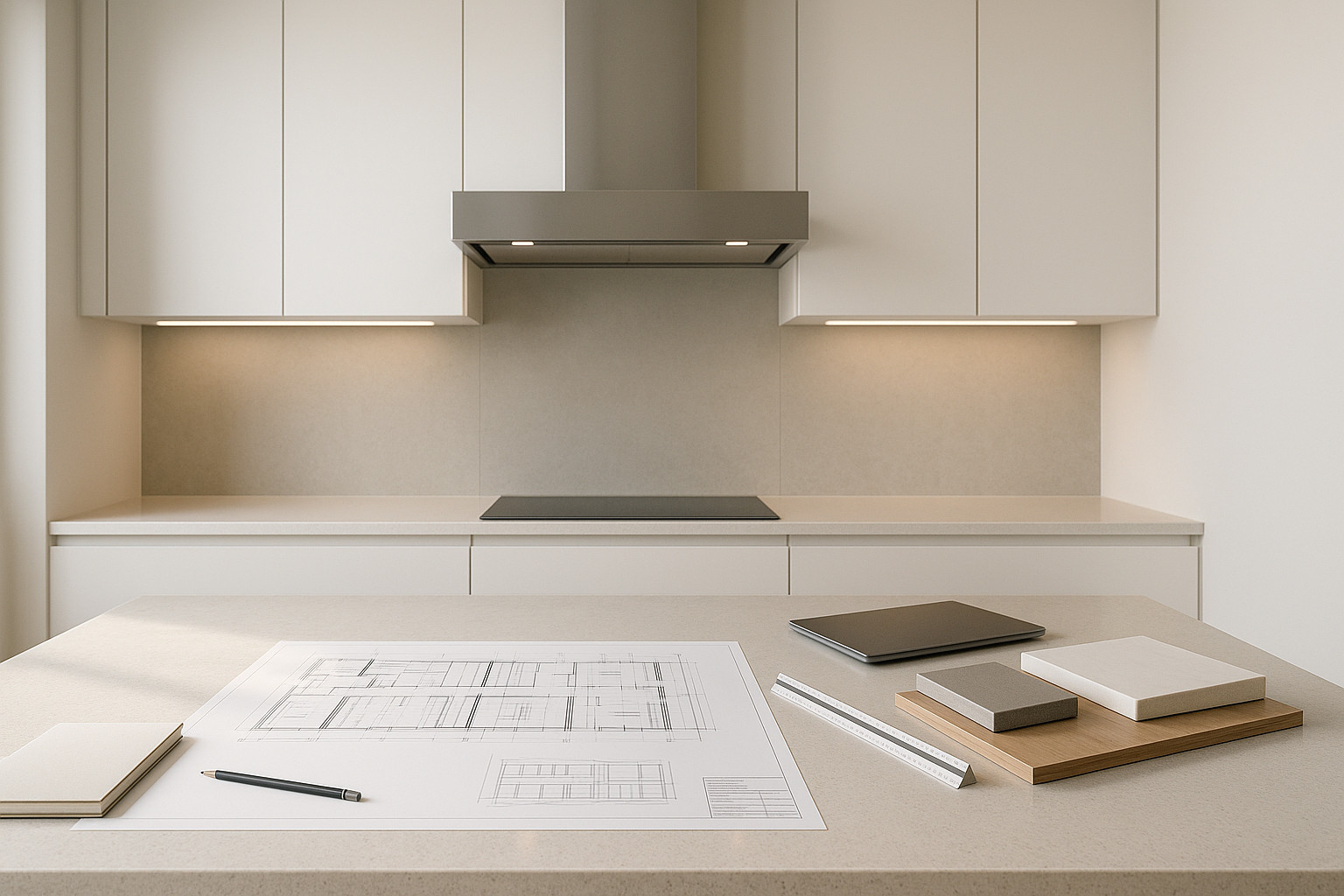
Feasibility First-Align Scope & Budget
Sound and ventilation play crucial roles in any kitchen upgrade. When we consider a quiet range hood installation, cost feasibility leads the process. Before further design, we clarify what a silent cooking ventilation system actually entails for your space and your priorities-framing both expectations and investment.
Our feasibility design phase defines a clear budget before construction begins. We align scope, materials, and priorities with real costs so every decision is grounded in numbers-not guesswork.
A feasibility-driven approach analyzes several quiet range hood installation options for your kitchen: under-cabinet hoods versus wall-mounted, external blower upgrades, custom sizes, or specialty noise-reduction models. These scope variations correspond to high-level ROM (Rough Order of Magnitude) pricing bands, such as low-noise under-cabinet systems or more robust island vent solutions. We present early value engineering choices as well: duct modification strategies, recirculating kits, and acoustic panel additions that trim cost without sacrificing essential performance. The result? A preliminary cost baseline directly tied to your chosen scope.
Establish the budget in feasibility, then manage it actively through design.
Cost is a design input, not an afterthought. That’s particularly true for a quiet range hood setup, where selections like blower location and ducting configuration drive both performance and total cost. The feasibility deliverable clarifies your priorities for sound, performance, finish level, and layout-all measured against their budget impacts from day one.
By the end of feasibility, you have a documented scope and a formal cost band-for example, €120k–€140k for a full kitchen update including a quiet hood system-anchored to real-world decisions, not guessing or allowances. Before moving further, we confirm what matters most-whether it’s minimum decibel rating, advanced filtration, or a subtle custom liner-and set expectations transparently. For broader kitchen planning resources, our kitchen remodeling insights outline further feasibility guidance.
Design with Cost Checkpoints
Once feasibility sets the stage, our design team moves to detailed planning-always with real-time budget management at key milestones. Quiet range hood installation can swing costs quickly due to myriad equipment choices and integration requirements. To keep owners in control, we structure disciplined cost gates throughout design:
Scheduled Cost Checkpoints
There are four explicit cost gates:
• After Schematic Design
• After Design Development
• At approximately 50% Construction Documents
• At approximately 90% Construction Documents
At each stage, our team matches the refined design against your budget and verifies the ongoing fit. Whether we’re evaluating a premium insert with an external blower or simplifying cabinetry for easier duct routing, every choice is costed and tracked.
Throughout detailed design, we treat the budget as a live document. Scheduled cost checkpoints at key milestones confirm scope against budget and capture value-engineering trade-offs.
Benefits of Value-Driven Design
This staged approach means you see exactly how changes-say, a shift from a standard to a custom range hood, or an adjustment to include noise-damping ductwork-impact your budget as decisions are made. You never reach construction with unresolved cost questions. For reference, our design methodology details this iterative, transparent process.
Hypothetical Numeric Tightening Example
In many projects, we see narrowing cost ranges as choices solidify. For example, a hypothetical kitchen renovation including a quiet range hood installation might tighten as follows: Feasibility: €120k–€140k → Design Development: €132k–€136k → 90% Construction Documents: €134.8k (price locked pre-construction). This exemplifies how transparency and discipline lead to clear expectations-always locked before build, never as an afterthought.
Design Decision Areas for Quiet Ventilation
Key checkpoints commonly address:
• Range hood model and size selections
• In-line versus remote blower configuration
• Ductwork routing complexity
• Finish integration for cabinetry and tile
• Required clearances and code compliance
• Acoustic mitigation strategies
Every checkpoint helps compare benefit to cost-balancing silence, airflow, and aesthetics. For more context, see our remodeling approach for integrated design-build guidance.
Pre-Construction Price Lock
After design and documentation pass all cost gates, we transition to the final checks before building. Here, scope, drawings, and specifications for your quiet range hood installation are complete-for cabinetry, ventilation, power, and finishes. We clarify all material and equipment allowances, select suppliers, and tally final special-order item costs.
Before we start construction, we finalize drawings and specifications, clarify allowances, and lock the price on paper. This approach reduces owner risk and minimizes the need for contingencies.
We lock pricing before we mobilize. For a kitchen upgrade that includes a quiet range hood installation, this means every vent option, sound-dampening feature, and finish item reflects your pre-approved selections. No “open pricing” remains-and allowances, where used, are capped with defined supplier selections, not placeholders. Fewer surprises, lower owner risk. This method minimizes the need for post-mobilization contingency funds and keeps team focus on executing the agreed-upon scope.
Clarifying Your Installation Scope
The pre-construction phase details critical quiet installation factors:
• Final appliance/hood model and specs
• Confirmed duct and termination routing
• Upgraded sound insulation as specified
• Custom cabinetry or liner details
• Power and lighting requirements
• Coordination with other kitchen finishes
Any open questions or supplier details are resolved before site work starts. All pricing-including labor, materials, and specialty acoustics (if needed)-is aligned on paper prior to mobilization.
Build with Confidence
With your quiet range hood installation scope locked and pricing papered, the construction phase becomes disciplined execution. We transition risk management from budgeting to scope control: adhering to the finalized design, processing only documented changes, and proactively communicating every step of installation.
This process-driven approach reduces owner risk and limits surprises. We manage documented change requests-should you select a different finish or add an accessory-using formal scope and pricing procedures. For quieter range hood results, execution means following manufacturer best practices for duct sealing and vibration isolation (often detailed in guides like this installation resource).
Tools Needed for Effective Installation
During construction, our field team uses tools and techniques appropriate to your chosen system-duct crimpers, acoustic caulks, decibel meters for post-install checks, and precise fasteners for vibration isolation. Planning for these in advance ensures correct fitment and performance, further containing cost and risk.
Common Mistakes in Quiet Range Hood Installation to Avoid
We avoid shortcuts that compromise silence or function-such as undersized ducting, improper fan sizing, or faulty sealing between the hood and cabinetry. Each risk is mitigated in pre-construction by aligning documentation, and in the field by following checklist-based quality control.
Scope control and disciplined change management mean your investment in a silent kitchen is protected. As unforeseen site conditions can arise, we advise right-sizing a modest reserve targeted to known unknowns, such as concealed framing or limited duct space, after design is complete.
Maintaining Your Quiet Range Hood Installation
Construction doesn’t end with punch-list completion. We walk clients through care for their low-noise system-filter cleaning schedules, periodic inspections for integrity of acoustic treatments, and guidance on maintaining airflow. Regular maintenance not only preserves performance but safeguards your original investment in a quiet cooking environment.
If future upgrades are required, or additional sound-dampening accessories are of interest, our team guides you in cost-managed fashion-providing scope and pricing before changes are approved.
Is a Quiet Range Hood Installation Worth the Investment?
For many clients, the answer is yes, provided the quiet range hood installation is cost-managed and aligns with their broader kitchen goals. Lower noise levels support open-plan living, improve home acoustics, and can increase long-term property enjoyment. We encourage evaluating return on investment with both cost and experience in mind. By designing and building with disciplined process and locked pricing, owners limit risk and maximize value.
Final Tips for a Successful Quiet Range Hood Installation
Whether upgrading as part of a full kitchen remodel or focusing solely on ventilation, our advice is to:
• Involve installation teams early after feasibility and design checkpoints
• Confirm every key selection in writing pre-construction
• Plan for right-sizing of both equipment and reserves by project’s end
• Document any changes before field execution
• Maintain your system per manufacturer and installer guidance
Schedule a feasibility consult to define your budget before you build.
FAQ
Why should I consider a quiet range hood installation for my kitchen?
Installing a quiet range hood makes a big difference in your kitchen experience. Not only does it ensure powerful ventilation, but it also allows you to cook and socialize without noisy distractions. Moreover, a silent system can improve indoor air quality while maintaining a peaceful environment.
What are the main benefits of choosing a silent cooking ventilation system?
A silent cooking ventilation system offers several advantages. For example, it reduces unwanted noise, increases energy efficiency, and enhances comfort. In addition, our quiet range hood solutions often come with modern features, offering both style and performance in your kitchen.
How do I choose the best quiet range hood installation service?
To choose the right service, look for experience, a solid reputation, and excellent customer reviews. At Liv Companies, we recommend inquiring about past projects, warranties, and ongoing support so you feel confident with your choice. Above all, make sure the team understands your specific kitchen needs.
What common mistakes should I avoid during quiet range hood installation?
There are a few mistakes you can avoid for a smooth installation. For instance, ensure the hood is correctly sized and positioned for optimal airflow. Additionally, failing to use the proper tools or skipping professional help can lead to additional costs or poor results.
Is investing in a quiet range hood installation really worth it?
Absolutely! A quieter kitchen boosts comfort and resale value while effectively controlling cooking odors and smoke. In the long run, you’ll enjoy a cleaner indoor environment and an enhanced cooking experience with a reliable, peaceful ventilation solution from our team.